

Photo Credit: PIB
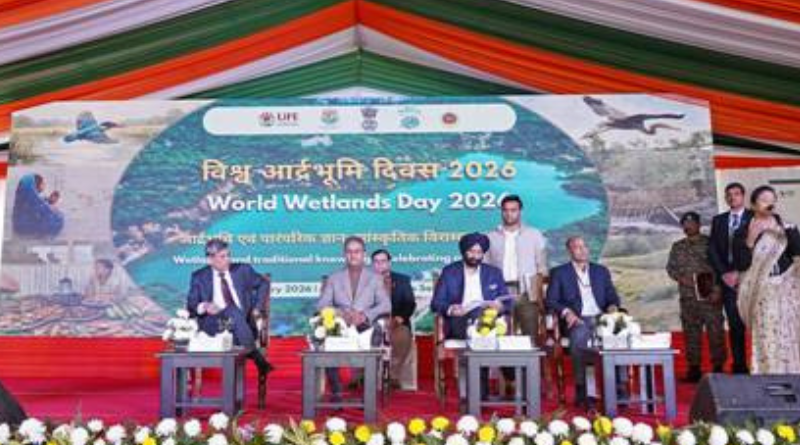
New Delhi, February 2, 2026: Union Minister for Environment, Forest and Climate Change Bhupender Yadav on Monday said that wetlands nurture not only ecosystems, but also communities, culture and livelihoods, underlining their vital role in sustaining life on Earth.
On the occasion of World Wetlands Day 2026, the Minister said in a post on the social media platform ‘X’ that “water is life and wetlands are the lifelines of the planet.”
He emphasized that India has placed communities and cultural heritage at the heart of its wetland conservation approach.
Yadav highlighted that under the environmentally conscious leadership of Prime Minister Narendra Modi, India’s Ramsar network has expanded from 26 sites in 2014 to 98 sites, making India a leader in Asia in wetland conservation.
National event on wetlands nurtures ecosystems at Asola Bhatti wildlife sanctuary:
To mark World Wetlands Day, the Minister of Environment, Forest and Climate Change organized a national-level event at Asola Bhatti Wildlife Sanctuary, New Delhi, on the theme ‘Wetlands and Traditional Knowledge: Celebrating Cultural Heritage.’
The event focused on the importance of wetlands and the role of traditional knowledge systems and local communities in their protection and sustainable management
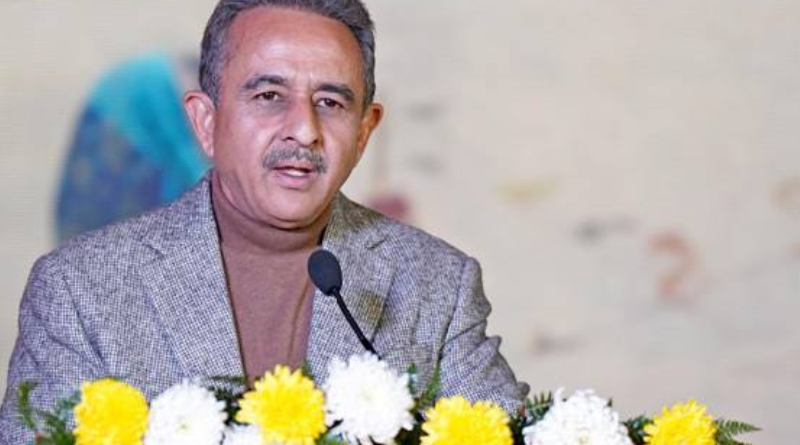
Addressing the gathering, Union Minister of State for Environment, Forest and Climate Change Kirti Vardhan Singh said that wetlands are not merely water resources, but are deeply woven into people’s daily social lives, culture, festivals and religious traditions.
He noted that traditionally, wetlands served as social spaces where communities, including children, gathered and interacted.
Expressing satisfaction over the increasing involvement of youth in wetland nurture conservation, Singh stressed that environmental protection cannot rely only on rules and regulations, and must evolve into a people’s movement.
Earlier, in a post on ‘X’ Singh highlighted the ecological and cultural importance of the Parvati Arga Bird Sanctuary in Gonda district of Uttar Pradesh—one of India’s 98 Ramsar Sites of international importance—noting that it supports numerous native and migratory bird species and holds deep cultural value for local communities.
A video teaser on the Parvati Arga Bird sanctuary was also launched during the event, offering a glimpse into the sanctuary’s delicate ecological balance and the interconnected web of life it sustains.
Call for urban wetland restoration:
Delhi Environment Minister Manjinder Singh Sirsa said that wetlands play a crucial role in everyday life, but rapid urbanization, encroachments and anthropogenic activities have severely impacted them.
He announced that the Delhi government has set a target to restore its water bodies within the next two years.
Secretary, Ministry of Environment, Forest and Climate Change, Tanmay Kumar, emphasized that environmental protection is not possible without community support.
He highlighted the role of Wetland Mitras in conserving wetland-nurturing ecosystems and creating a direct positive impact on local ecosystems, culture and livelihoods.
Referring to the sharp rise in the number of Ramsar sites since 2014, Kumar said this reflects growing public awareness about the importance of nurturing wetland ecosystems and the role of communities in their conservation.
The event began with the inauguration of an exhibition showcasing institutions and organizations working in the fields of wetland nurture biodiversity, and environmental conservation. States with newly designed Ramsar Sites were also felicitated.
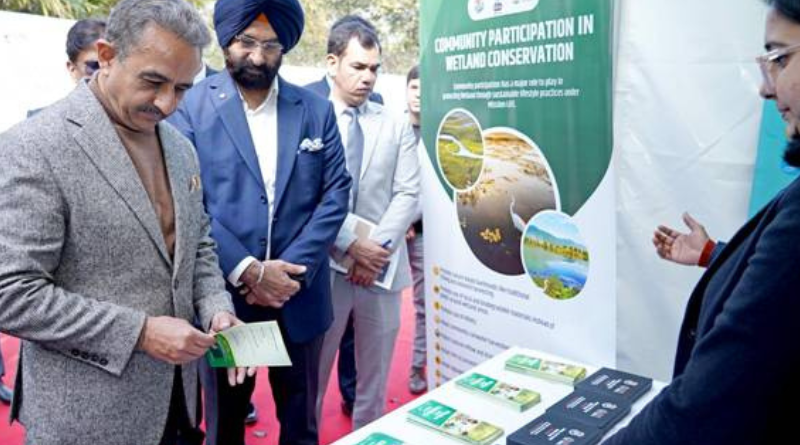
The Ministry released a publication titled “Cultural Wonders of Ramsar Sites,” highlighting the lesser-known cultural dimensions of Ramsar Sites and their role in preserving intangible cultural heritage linked to wetlands.
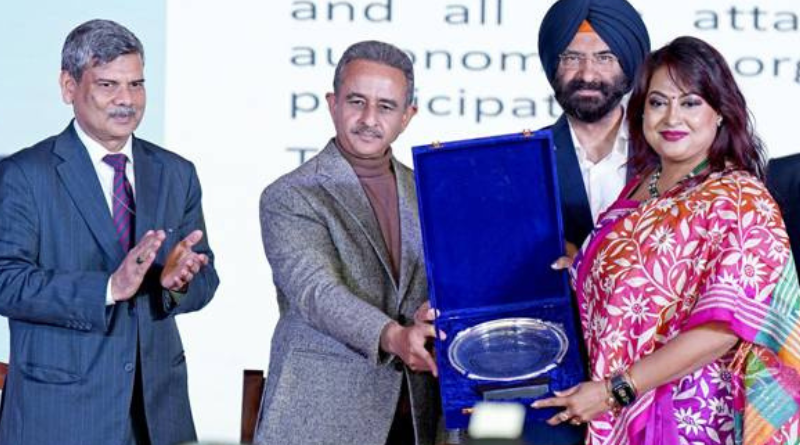
Swachhata Pakhwada 2025 awards were presented to, National Museum of Natural History, New Delhi, the Botanical Survey of India, Kolkata, Zoological Survey of India, Kolkata.
In recognition of their exemplary performance during Swachhata Pakhwada 2025.
Ministers interacted with Wetlands Mitras and school children to promote awareness and encourage public participation.
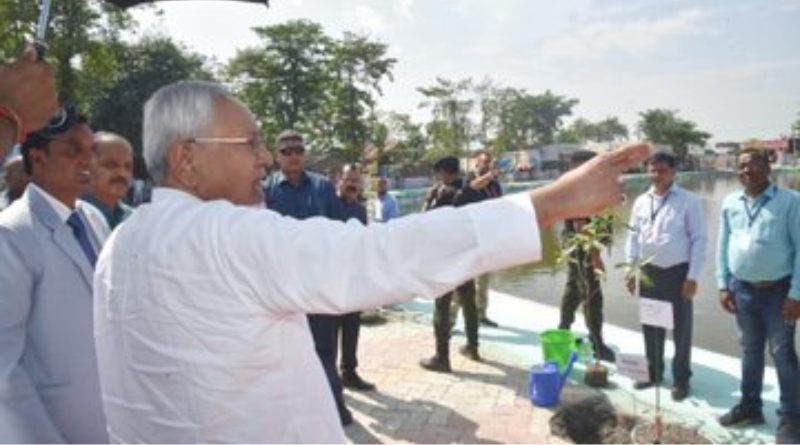
The event concluded with a plantation drive under the “Ek Ped Maa ke Naam’ Initiative, reinforcing the message of environmental responsibility with a goal to make a Wetland nurture ecosystem.
About World Wetlands Day:
World Wetlands Day is observed annually on 2 February to commemorate the adoption of the Ramsar Convention on Wetlands on 2 February 1971 in Ramsar, Iran.
India became a signatory on 1 February 1982 and now leads Asia with 98 Ramsar Sites of international importance.
EOM.





















































































One Response