

Photo Credit: The Suncity News.
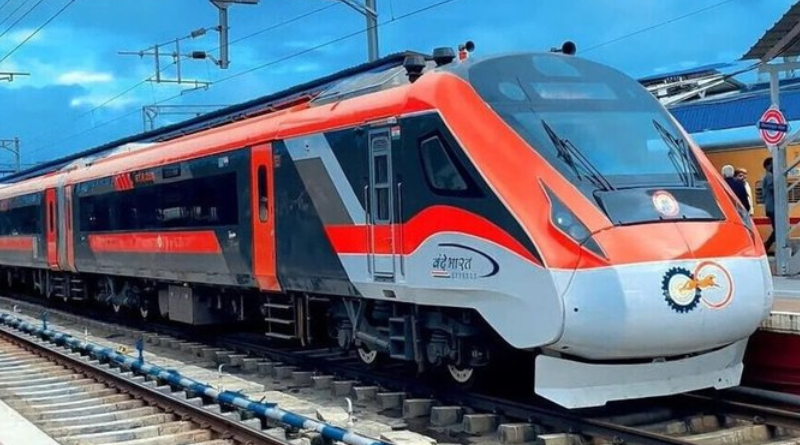
New Delhi, February 3, 2026: The Union Budget 2026-27 has provided a major impetus to railway development across India, with record state-wise allocations aimed at strengthening connectivity, enhancing passenger safety, modernizing infrastructure, and expanding freight capacity.
This sustained investment reflects the Government of India’s commitment to holistic, region-balanced development, positioning the railways as a key driver of economic growth, logistics efficiency, and national integration.
In the Union Budget 2026-27, the Ministry of Railways has firmly established rail investment as a catalyst for regional integration, passenger convenience, and economic opportunity, aligning with national priorities such as high-speed rail, multimodal mobility, full electrification, modern station infrastructure, and secure freight logistics.
Provision of high-speed rail corridors in the Union Budget:
A major transformation is envisaged in states such as Uttar Pradesh, with a proposed bullet train corridor between Delhi to Varanasi and Varanasi to Siliguri.
These corridors aim to significantly reduce travel time between major religious centres, boost tourism, and connect tier-two cities along the route.
The Varanasi-Siliguri high-speed corridor will link important religious, educational, and medical hubs across Uttar Pradesh, Bihar, and West Bengal, while the Delhi-Varanasi corridor is expected to enable travel in approximately 3 hours and 50 minutes.
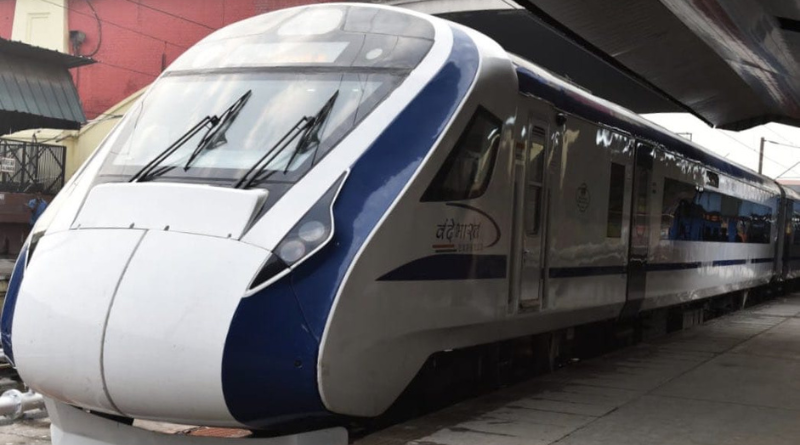
Further, the high-speed rail link from Varanasi to Siliguri via Patna will allow travel between the two cities in approximately 2 hours and 55 minutes.
Together, these corridors are expected to create a new economic and logistics corridor connecting Delhi, Uttar Pradesh, Bihar and West Bengal, significantly accelerating regional development and economic activities.
Boost to eastern India and North East:
West Bengal is set to benefit from Eastern India’s first high-speed rail service connecting Siliguri and Varanasi, improving inter-regional mobility and expanding trade, tourism, and service-sector opportunities.
Record allocations in the Union Budget to the North Eastern Region and adjoining states have enabled the construction of new rail lines, the redevelopment of stations, and major safety upgrades.
These initiatives are improving access to education, healthcare, tourism, and formal markets, while strengthening economic integration with the rest of the country and supporting local enterprises.
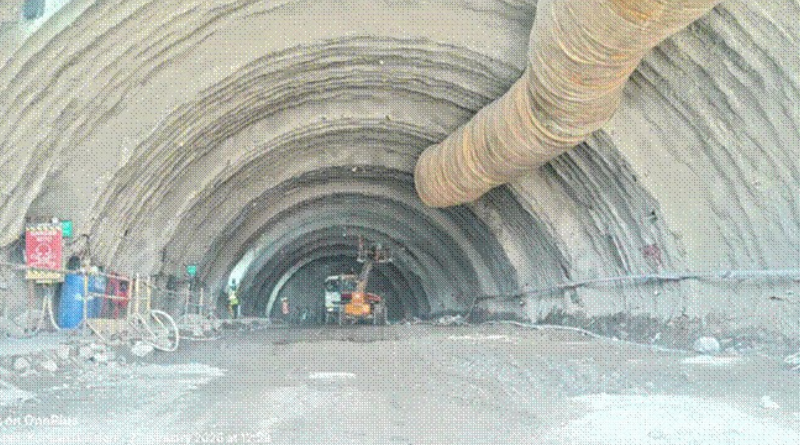
A key strategic initiative is the proposed 40-kilometre underground rail corridor to enhance connectivity between the Northeast and the rest of the country.
Plans include laying underground tracks and upgrading existing lines for track capacity, ensuring seamless, high-capacity rail movement for both passengers and freight through this critical transit zone.
States such as Punjab, Haryana, and Himachal Pradesh have achieved 100 percent railway electrification and are upgrading stations under the Amrit Bharat Station Scheme, improving sustainability, safety, and passengers’ amenities.
In mineral-rich and industrial regions, major projects in Jharkhand and the Rowghat-Jagdalpur rail line in Chhattishgarh are strengthening freight connectivity, improving logistic efficiency, and driving regional economic activity.
High-speed rail diamond in South India:
In South India, the union budget allocations are focused on high-impact passenger connectivity through an emerging high-speed rail diamond network, connecting Hyderabad, Bengaluru, Chennai, and surrounding urban centres.
This network will dramatically reduce travel times between major economic hubs, enabling seamless mobility across IT, manufacturing, and service sectors.
Bengaluru, as India’s leading technological hub, is expected to benefit significantly, with improved accessibility for business travel, talent movement, and inter-state commuting.
Upon completion, the Chennai-Bengaluru journey is expected to take approximately 1 hour and 13 minutes, Bengaluru to Hyderabad around 2 hours, and Chennai-Hyderabad about 2 hours and 55 minutes.
This network is projected to act as a major growth catalyst for Karnataka, Telangana, Andhra Pradesh, Tamil Nadu, Kerala and Puducherry.
Western, central and Himalayan connectivity:
In Maharashtra, a significant portion of the union budget allocation is directed towards capacity-enhancing and high-impact projects, including the Mumbai- Pune high-speed rail corridor, expansion of congested main lines, redevelopment of major stations and strengthening suburban and inter-city services to meet growing passenger and freight demand.
The upcoming Mumbai-Pune high-speed corridor will reduce travel time to approximately 48 minutes, while connectivity from Pune to Hyderabad is around 1 hour and 55 minutes will integrate western, central, and southern regions into a seamless high-speed network.
In Himalayan and Northern India, the union budget’s priorities are all-weather connectivity, tourism, and economic access:
The Rishikesh-Karnprayag rail line in Uttarakhand, featuring extensive tunneling works, will improve access to remote areas, reduce travel time, and facilitate the movement of pilgrims and tourists.
Network expansion, electrification, and modernization in Himachal Pradesh will further strengthen connectivity and promote sustainable tourism.
Overall, the Union Budget 2026-27positions Indian Railways as a strategic national asset, driving connectivity, regional equity, logistics efficiency, and long-term economic growth, while laying the foundation for a modern, safe, and future-ready rail network across India.
EOM.








































































One Response