
BY Tanmay Sharma
Photo Credit: The Suncity News
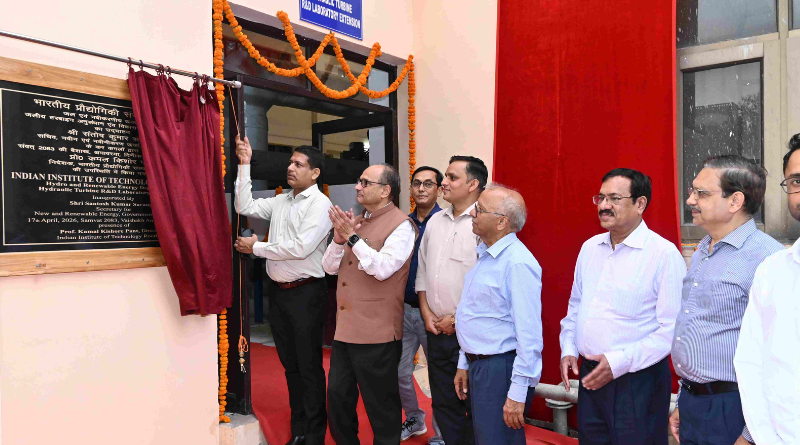
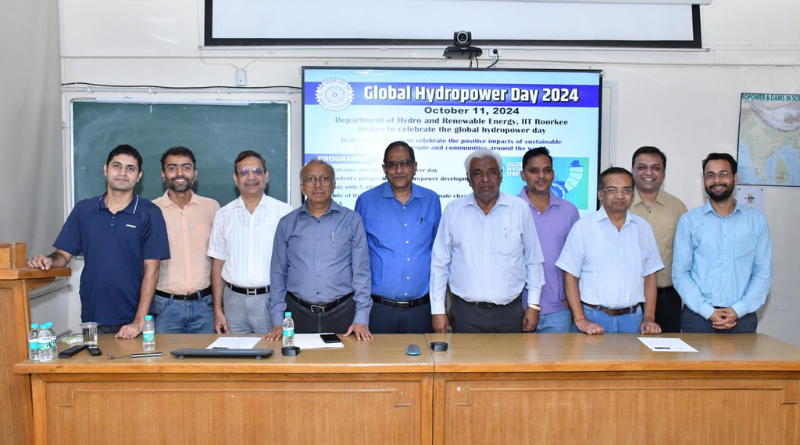
Roorkee (Uttarakhand), April 21, 2026: In a major boost to India’s clean energy ambitions, Indian Institute of Technology Roorkee (IIT Roorkee) has established a state-of-the-art research facility dedicated to Ultra Low Head (ULH) and Hydrokinetic Turbine technologies.
The initiative underscores the institute’s commitment to supporting India’s Net Zero 2070 goals.
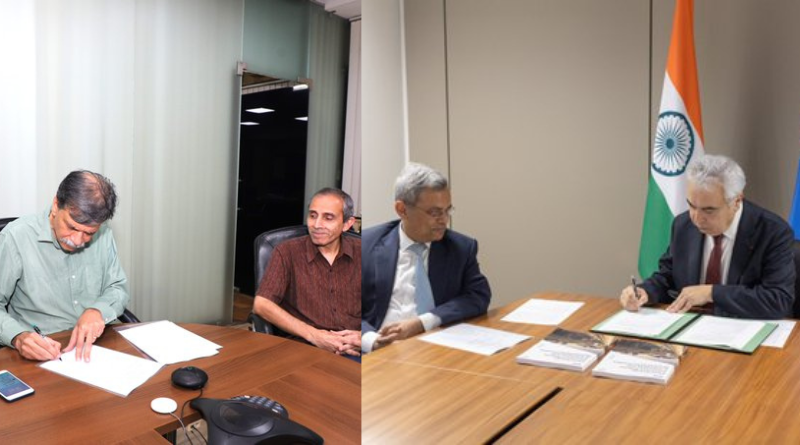
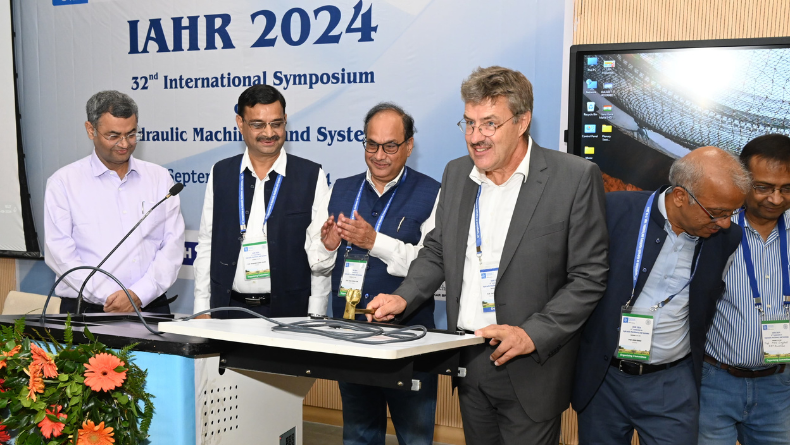
The facility, located within the Department of Hydro and Renewable Energy, was inaugurated by Santosh Kumar Sarangi, Secretary at the Ministry of New and Renewable Energy.
Santosh Kumar Sarangi highlighted small hydro power projects in India at IIT Roorkee:
Highlighting the importance of Small Hydro Power (SHP), Sarangi noted that the sector holds immense potential, particularly in rural, remote, and hilly regions.
“Small hydro power will play a vital role in energy transition while generating over 50 lakh person-days of employment by FY 2030-31,” he said.
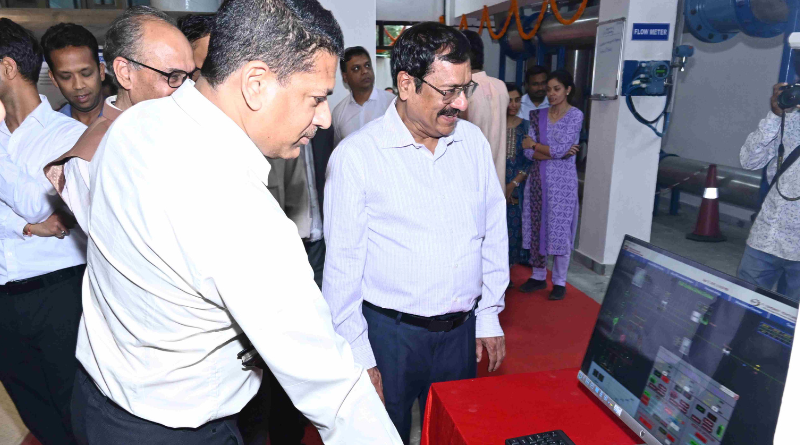
He added that the new facility will accelerate R&D in emerging SHP technologies, enabling industry adoption and large-scale deployment. The initiative complements the government’s recently announced SHP Development Scheme.
Cutting-edge research infrastructure:
The facility has been developed under the leadership of Arun Kumar with financial support from MNRE. It comprises two key components:
Ultra-Low Head (ULH) laboratory—designed to test advanced turbine models, includes vertical and horizontal propeller turbines, features fish-friendly screw turbines, Capable of generating power from water heads as low as 1—4 meters.
These conditions are commonly found in irrigation canals and wastewater systems—areas largely untapped by conventional hydro technologies.
Hydrokinetic Turbine (HKT) facility—focusing on generating electricity from flowing water without requiring dams or large head differences, ideal for rivers, canals, and tidal flows.
Expanding renewable energy capabilities:
During his visit, Sarangi also reviewed broader renewable energy research at IIT Roorkee, including work in solar (especially floating solar technology), Biomass and hydrogen energy, grid integration systems, and indigenous battery development.
He also visited operational hydro projects such as Mohammadpur Power House (commissioned in 1945) and the Chilla project on the Ganga River.
Vision for sustainable energy:
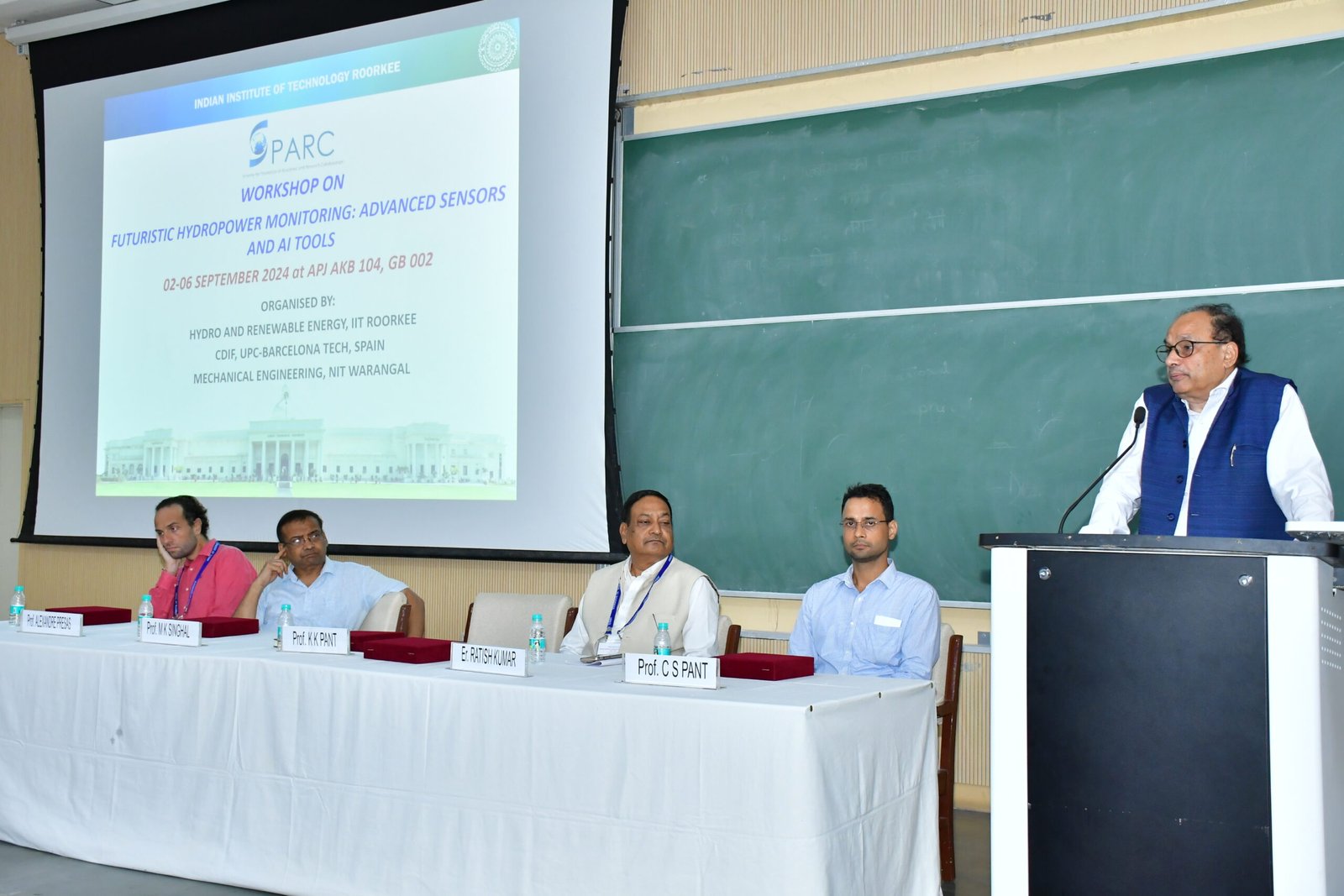
Kamal Kishore Pant, Director of IIT Roorkee, emphasized the institute’s role in driving innovation-led sustainability.
“This facility will enable reliable, scalable, and sustainable energy systems, contributing not only to national priorities but also to global climate goals,” he said
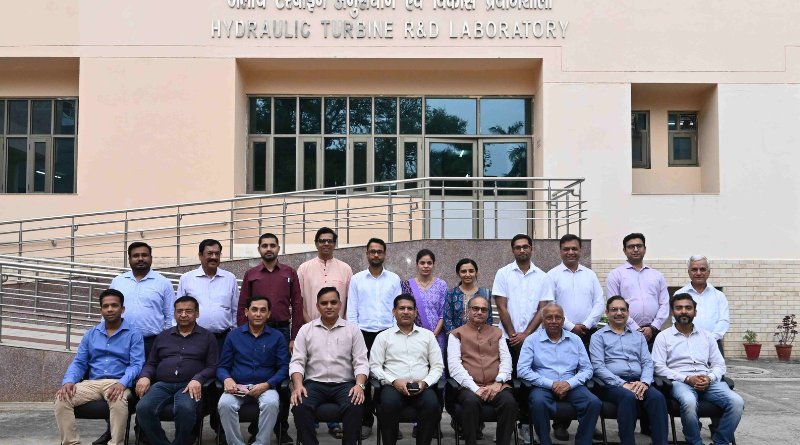
The establishment of this advanced R&D facility marks a transformative step in India’s renewable energy journey, particularly in unlocking the untapped potential of small and micro hydro resources.
By focusing on low-head and hydrokinetic technologies, IIT Roorkee is paving the way for decentralized, eco-friendly power generation—especially in regions where traditional energy infrastructure remains limited.
Also Read: IIT Roorkee to host Cognizance 2026 from March 13-15.
EOM.