

Photo Credit: PIB
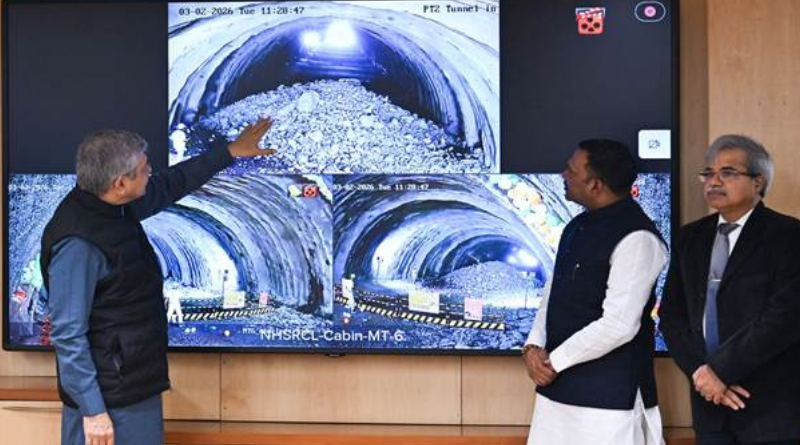
New Delhi, February 3, 2026: Union Minister for Railways, Information & Broadcasting, and Electronics & Information Technology Ashwini Vaishnaw on Tuesday announced a major engineering milestone in the Mumbai-Ahmedabad Bullet Train project with the successful breakthrough of the second mountain tunnel in Palghar district.
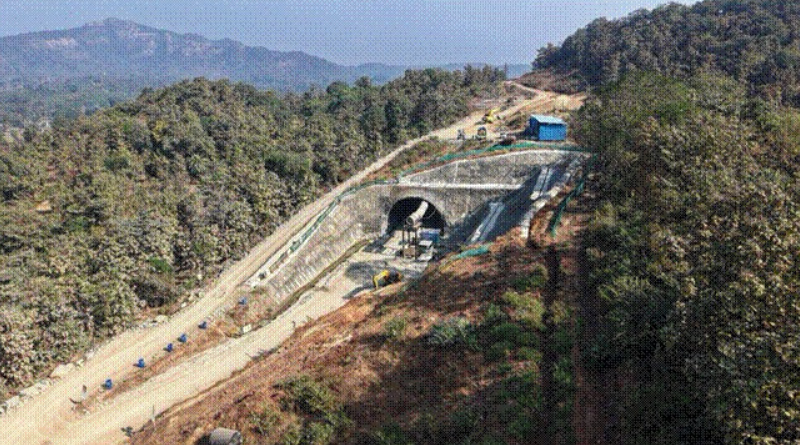
The newly completed tunnel, Mountain Tunnel-6 (MT-6), is 454 metres long and 14.4 metres wide, designed to accommodate both up and down tracks of the high-speed rail corridor.
This marks the second mountain tunnel breakthrough in Palghar within a month, following the completion of MT-5 near Saphale on January 2, 2026.
Ashwini Vaishnaw pointed out advanced tunneling technology used in the project:
The tunnel was excavated from both ends using the New Austrian Tunnelling Method (NATM)—a modern drill-and-controlled blasting technique—allowing engineers to adapt in real time to complex geological conditions.
The excavation was completed within 12 months.
A tunnel breakthrough represents a critical phase in construction, when excavation teams digging from opposite ends successfully meet, creating a continuous passage through the mountain.
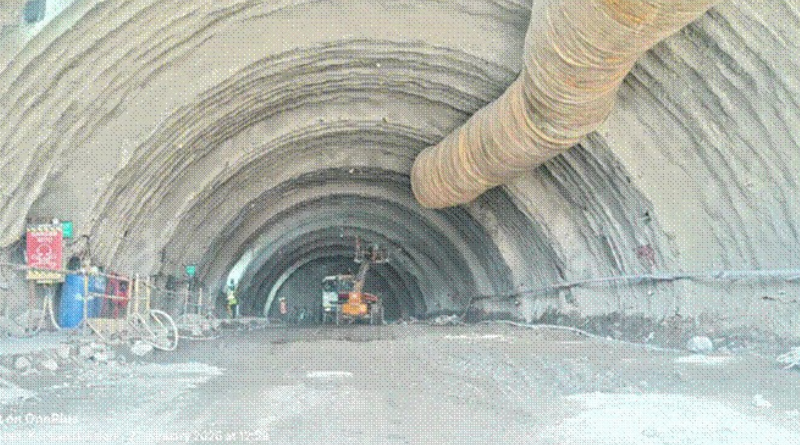
NATM is particularly suited for challenging terrains like Palghar, where tunnel boring machines are less effective.
The method relies on shotcreting, rock bolts, and lattice girders, enabling flexibility and enhanced safety.
Ashwini Vaishnaw praises speed and innovation:
Congratulating the project team, Ashwini Vaishnaw said the pace of construction has instilled new confidence in the country.
“The progress achieved by the high-speed rail team is remarkable. The project is receiving global attention for its innovations in construction and technology,” the minister said.
Ashwini Vaishnaw emphasized that many advanced construction technologies and large machines used in the project are manufactured in India, showcasing the country’s growing engineering capabilities.
Ashwini Vaishnaw said that the Gujarat section of the bullet train corridor is expected to begin commercial operations next year.
He added that high-speed rail services are projected to reach Thane by 2028 and Mumbai by 2029.
Lok Sabha MP from Palghar, Dr. Hemant Vishnu Savara, who was present at the event, expressed gratitude to the Union Minister and highlighted the district’s rapid development.
He said Palghar is witnessing transformative growth through major infrastructure projects such as the high-speed rail corridor, the Dedicated Freight Corridor (DFC), and the upcoming Vadhvan Port.
He noted that railway investment in Maharashtra has increased significantly since 2014, leading to faster project execution and improved services.
Safety and construction progress in Maharashtra:
Worker safety inside the tunnel was ensured through real-time geotechnical monitoring, fire safety systems, proper ventilation, and controlled access arrangements.
Construction in Maharashtra is progressing on multiple fronts: The longest river bridge over the Vaitarna River has reached pier level, Foundation work is underway on bridges across the Ulhas and Jagani rivers, Rapid construction is ongoing at all four stations, Major national and state highway crossing are being built using long-span steel bridges, A 21-km underground tunnel between Bandra Kurla Complex and Shilphata is also under construction.
In total, seven mountain tunnels are currently under construction in Palghar district.
The Mumbai-Ahmedabad High-Speed Rail (MAHSR) Project spans approximately 508 kilometres, covering 352 km in Gujarat and Dadra & Nagar Haveli and 156 km in Maharashtra.
As of January 27, 2026, the project has completed: 334 km of viaducts, 17 river bridges, 12 major crossings over national highways, railways, and other infrastructure.
Track laying and electrification works have also gathered momentum in Gujarat.
Once operational, the corridor will connect major cities, including Sabarmati, Ahmedabad, Anand, Vadodara, Bharuch, Surat, Bilimora, Vapi, Boisar, Virar, Thane, and Mumbai, marking a transformative leap in India’s transport infrastructure and regional economic development.
Also Read: Ashwini Vaishnaw conducts a surprise inspection of railway stations in Bihar.
EOM.














































2 Responses