

Photo Credit: PIB
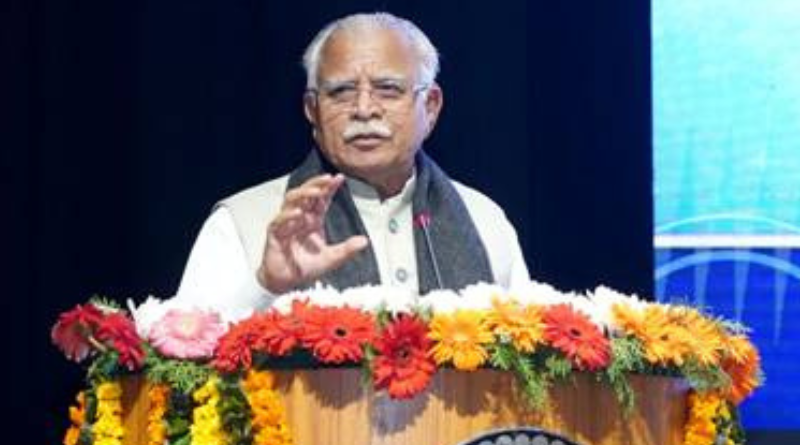
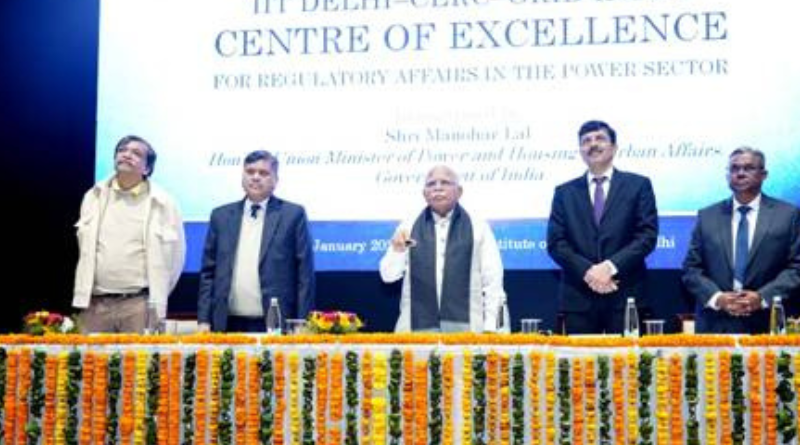
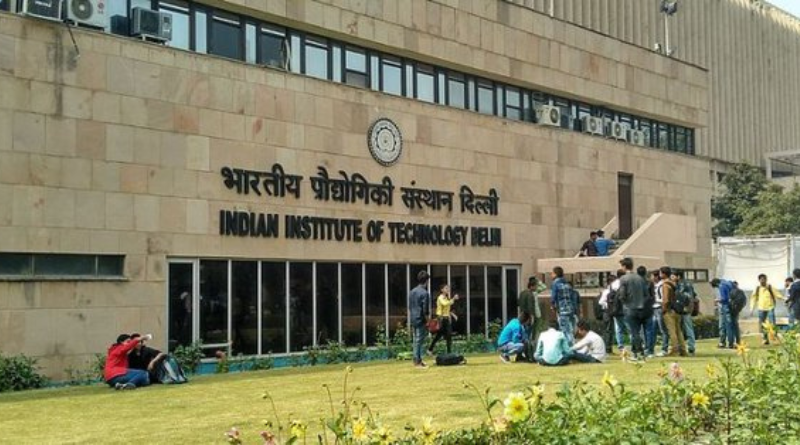
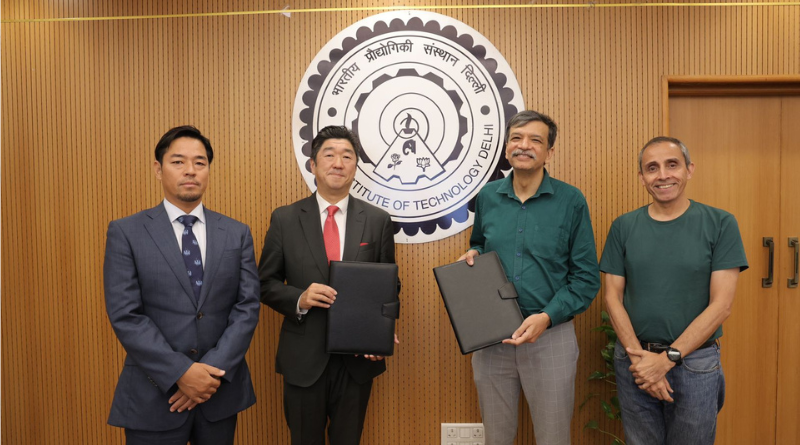
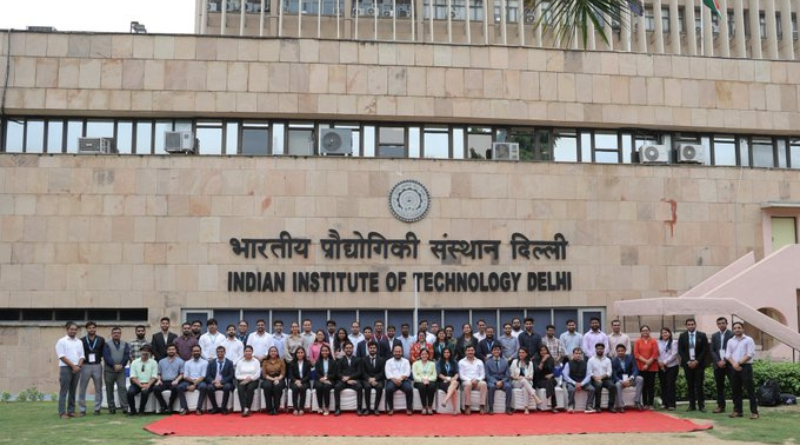
New Delhi, January 19, 2026: Union Minister of Power Manohar Lal Khattar on Monday inaugurated the Centre of Excellence (CoE) for regulatory affairs in the power sector at IIT Delhi.
The Centre has been jointly established by IIT Delhi, the Central Electricity Regulatory Commission (CERC) and the Grid Controller of India Ltd. (Grid India), marking a significant step towards strengthening India’s regulatory capacity amid rapid changes in the power sector.
The initiatives come at a time when India’s electricity sector is witnessing rising demand, large-scale integration of renewable energy, expansion of power markets, and increasing use of digital technologies.
The Centre of Excellence is envisaged as a national-level hub for regulatory research, capacity building, advisory support, and knowledge dissemination.
By situating the CoE within a premier academic institution and anchoring it through close collaboration with the national power regulator and system operator, the initiative brings together policy, regulation, system operations, and academic research under a single institutional framework.
The centre will work closely with CERC and Grid India to identify key regulatory and sectoral challenges, support human resource development, strengthen institutional capabilities, and promote effective knowledge management.
It will also undertake cutting-edge research with access to global academic and policy networks, while providing advisory and consultancy support to regulators and power sector stakeholders.
Manohar Lal Khattar emphasized that strong regulation backed by research is essential:
Inaugurating the centre, Manohar Lal Khattar said that as India moves towards clean energy, competitive markets, and consumer-centric reforms, strong regulation supported by research and knowledge is essential. “This Centre of Excellence at IIT Delhi will play a key role in supporting informed and forward-looking regulation,” Manohar Lal Khattar said.
The centre’s work will directly support policy and regulatory decision-making by addressing the power sector trilemma of affordability, sustainability, and efficiency.
It will help strengthen institutional capacity within distribution utilities and regulatory commissions, and equip policymakers with advanced analytical tools and system models to assess regulatory proposals from the perspectives of consumer welfare, system reliability, and investment signals.
At a broader level, the Centre will inform power sector reforms at a critical juncture, as solar and wind energy become mainstream and fundamentally reshape power system planning, operations, and regulatory frameworks.
Stakeholders highlight the importance of evidence-based regulation:
IIT Delhi Director Prof. Rangan Banerjee said the Institute was delighted to partner with CERC and Grid India. “We aim to create new knowledge and analysis that will enable the electricity sector to be sustainable, affordable, and future-ready, while also supporting capacity building for regulatory institutions and professionals,” Manohar Lal Khattar said.
CERC Chairman Jishnu Barua noted that effective regulation must be backed by sound analysis, data and long-term thinking. “This Centre will help deepen regulatory research and strengthen evidence-based policymaking in the power sector,” Manohar Lal Khattar said.
Grid India Chairman and Managing Director S. C. Saxena emphasized that the regulatory framework must align with the realities of grid operations. “Through this centre, operational experience and system insights will directly inform regulatory research and market design,” Manohar Lal Khattar said.
Power Secretary Pankaj Agarwal congratulated IIT Delhi, CERC, and Grid India for establishing the centre, stating that it would play a crucial role in the development of India’s power sector.
The CoE will undertake multidisciplinary research in areas including power sector regulation, market design, grid operations, energy transition challenges, decarbonization pathways, digitalization, and emerging technologies such as energy storage, demand response, and green hydrogen.
It will also conduct structured training programs to build long-term regulatory capacity among sector professionals.
The partnership between CERC, Grid India, and IIT Delhi represents a unique institutional model that brings together regulatory leadership, operational expertise, and academic excellence—aimed at creating robust, adaptive, and future-ready regulatory frameworks for India’s power sector.
Also Read: Patna to host a regional conference of energy ministers on June 24 to boost power generation.
EOM.























































































3 Responses