Aqua Life Conservation monitoring Centre established at the Wildlife Institute of India (WII), Dehradun.
Photo Credit: Social Media
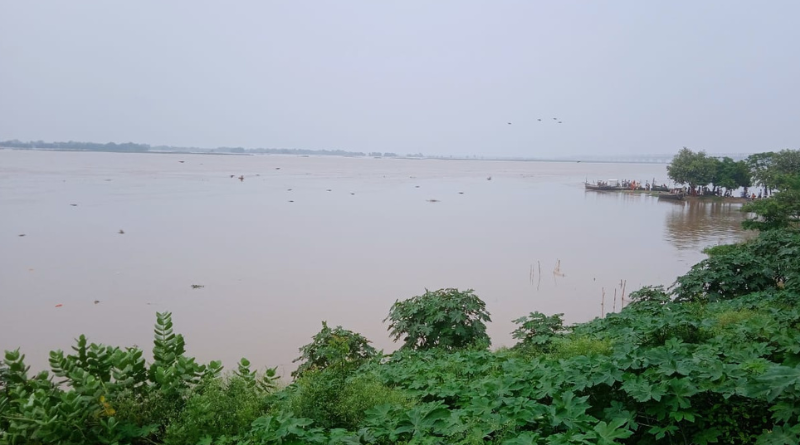
New Delhi, February 2, 2026: The Aqua Life Conservation monitoring Centre for the Ganga and other rivers, inaugurated on January 13, 2026, has been established at the Wildlife Institute of India (WII), Dehradun, as a dedicated national facility for research, monitoring, and conservation of riverine and freshwater ecosystems and their biodiversity.
The centre is equipped with advanced laboratory facilities for ecotoxicology, aquatic ecology, and spatial ecology.
The ecotoxicology laboratory assesses the presence, distribution, and impact of pollutants in river systems and supports non-invasive studies on pollution exposure in aquatic species such as the Gangetic dolphin and otters.
The aquatic ecology laboratory focuses on biodiversity analysis, including molecular-level studies of freshwater organisms.
The spatial ecology laboratory enables spatial analysis to support river conservation planning and freshwater ecosystem management.
The centre also houses a specialized library, serving as a resource hub for research on rivers and freshwater ecology.
Strengthening field-level monitoring and species recovery through the Aquatic Life conservation monitoring centre:
To enhance on-ground Aqua Life conservation efforts, a Spatial Monitoring and Reporting Tool (SMART) laboratory has been established at the National Chambal Sanctuary.
This facility supports digital patrolling and monitoring of rivers and wetlands, aiding field-level surveillance of aquatic species and habitats, including Gharial and turtle populations.
A rear-and-release facility has been renovated at the National Chambal Sanctuary in Etawah to support recovery programs for endangered turtle species, including the Red-crowned Roofed Turtle.
Additionally, a transit and holding facility has been created along the Saryu River in the Bahraich district for triage and treatment of confiscated turtle groups and rescued gharials.
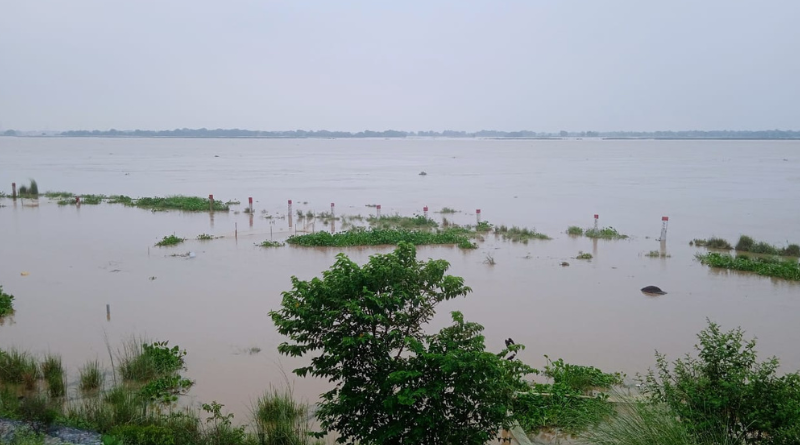
Six aquatic species rescue and rehabilitation centres have been established across the Ganga River basin in collaboration with state forest departments.
These centres are located at Narora and Sarnath (Uttar Pradesh), Bhagalpur (Bihar), and Barrackpore (West Bengal).
The facilities provide infrastructure for Aqua Life conservation, breeding, rearing, and veterinary care of aquatic wildlife and are operated by trained personnel, including qualified veterinarians.
Global recognition and international collaboration for Aqua Life Conservation:
India’s Namami Gange initiative has been recognized by the United Nations as one of the top 10 World Restoration Flagship Initiatives out of more than 150 initiatives from 70 countries.
The recognition was conferred at the 15th Conference of the Parties (COP15) to the Convention on Biological Diversity (CBD) held in Montreal, Canada.
Following this recognition, the National Mission for Clean Ganga (NMCG) has adopted several international best practices in water resources development and management. Key collaborations include, establishment of a Smart Lab for Clean Rivers (SLCR) under the India-Denmark Green Strategic Partnership, aimed at developing global solutions for clean river water through collaborative research, living lab approaches, and knowledge sharing.
A technical cooperation agreement with Germany for the Support for Ganga Rejuvenation (SGR) project, focusing on strengthening quality infrastructure for water monitoring.
Creation of a Centre of Excellence for Water under the India-Netherlands Strategic Water Partnership, dedicated to identifying, demonstrating, and implementing advanced global water technologies through pilot projects.
This information was provided by the Minister of State for Jal Shakti, Raj Bhushan Choudhary, in a written reply in the Rajya Sabha.
EOM.

Pingback: Jal Jeevan Mission covers over 81% Rural Households with tap water connections: Government.
Pingback: MCG signs MoU with A-PAG to improve air quality in Gurugram.