Study reveals long-range desert dust transport carrying airborne pathogens to the Eastern Himalayas.
Photo Credit: PIB
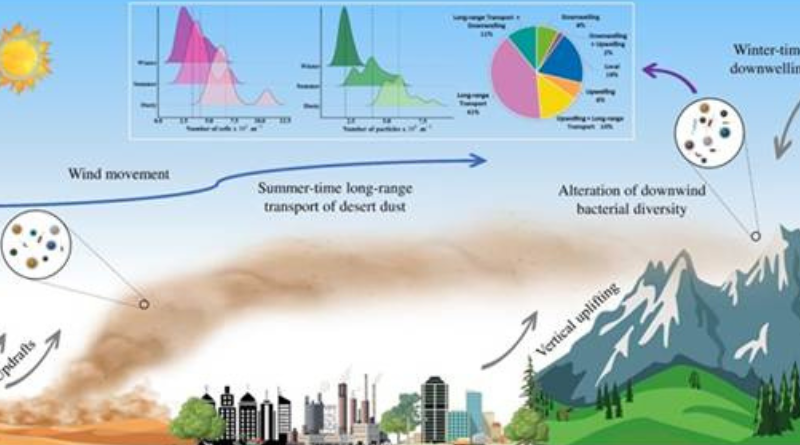
New Delhi, January 28, 2026: A new scientific study has revealed that airborne pathogens carried by desert dust plumes from western India are reaching the upper reaches of the Eastern Himalayas, with potential links to respiratory, skin, and gastrointestinal diseases in high-altitude populations.
The atmosphere of Himalayan hilltops has traditionally been regarded as clean and health-promoting.
However, human vulnerability in these regions is already heightened due to cold climatic conditions and hypoxia.
Desert dust is turning out to be a health concern for people living in the Himalayas:
Despite this, scientific evidence connecting airborne microbial exposure to health outcomes in Himalayan populations has remained limited, and the microbiological dimension of transboundary dust transport has been poorly understood.
This critical knowledge gap prompted researchers to undertake the present study.
Researchers from the Bose Institute, an autonomous institute under the Department of Science and Technology (DST), conducted more than two years of continuous monitoring of dust storms originating from the arid regions of western India.

The study found that intense desert dust storms can travel hundreds of kilometers, passing over the densely populated and polluted Indo-Gangetic Plain, before finally depositing over the Himalayan hilltop regions.
These desert dust plumes were shown to carry airborne bacteria, including potential human pathogens.
Mixing of local and long-range Pathogens:
In addition to pathogens transported over long distances, the study highlights that vertical uplift of air pollution from the Himalayan foothills injects locally sourced pathogens into the high-altitude atmosphere.
These locally uplifted microbes mix with long-range desert dust travelers, reshaping the bacterial community suspended over the Himalayas.
This altered microbial composition is associated not only with respiratory and skin diseases but also with an increased risk of gastrointestinal infections.
The findings, published in the international journal Science of the Total Environment, represent a first-of-its-kind quantitative assessment demonstrating how: Horizontal long-range dust transport, and Vertical uplifting of polluted air from foothills. Together perturb the atmospheric bacterial community over the Himalayas, with direct implications for public health.
Towards health forecasting and Viksit Bharat 2047:
This research provides critical scientific inputs for strengthening national health action plans and for developing early warning and health forecasting systems.
The findings align closely with India’s long-term vision of Viksit Bharat 2047, emphasizing the integration of environmental science, public health, and sustainable development.
Also Read: Cold wave intensifies in Bihar, schools closed, transport disrupted.
EOM.