Regional consumer protection workshop held in Patna; focus on digital justice and faster grievance redressal.
Photo Credit: PIB

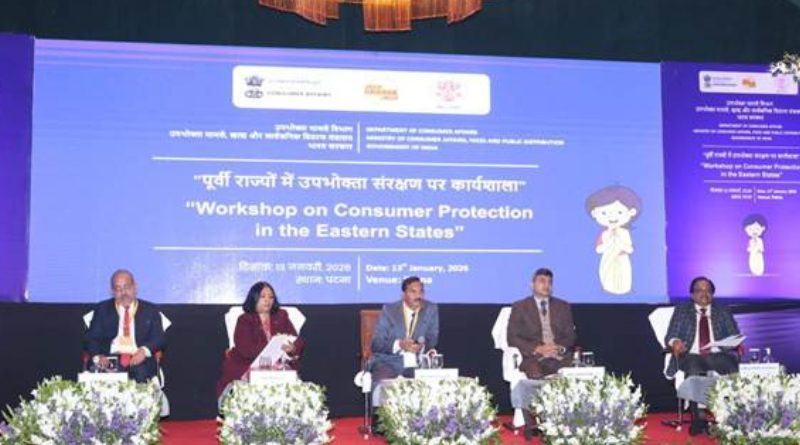
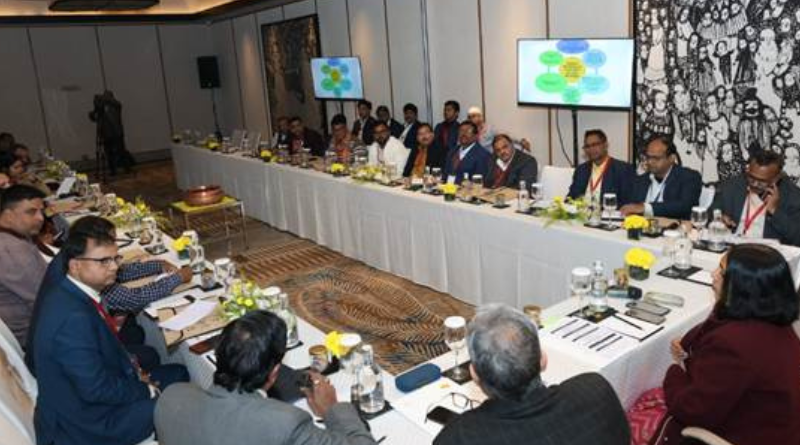
Patna, January 13, 2026: The Department of Consumer Affairs, Government of India, on Tuesday organized a Regional Workshop on Consumer Protection for Eastern States in Patna, bringing together key stakeholders from Bihar, West Bengal, Jharkhand, and Odisha.
The workshop aimed to strengthen consumer grievance redressal mechanisms and improve the overall functioning of Consumer Commissions.
The deliberations focused on reducing case pendency, improving compliance with consumer commission orders, leveraging digital tools for faster justice, and addressing emerging challenges such as dark patterns and unfair trade practices in the digital marketplace.
Strong push for digital consumer justice:
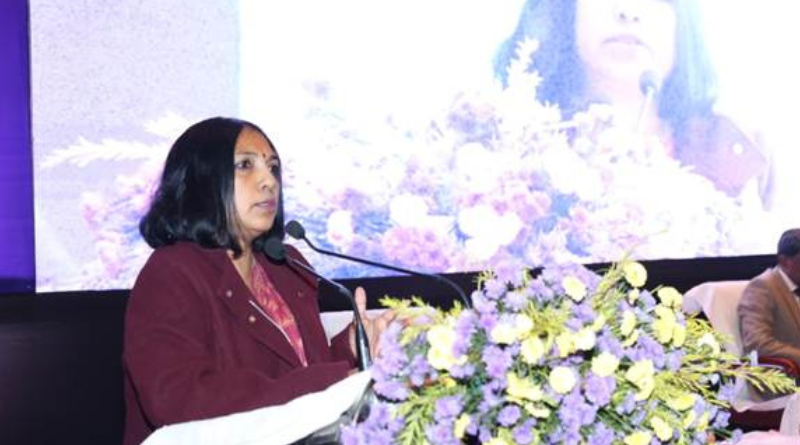
Delivering the keynote address, Nidhi Khare, Secretary, Department of Consumer Affairs, highlighted major reforms undertaken to modernize India’s consumer grievance redressal system.
She emphasized the expanding role of the National Consumer Helpline (NCH 2.0) as a pre-litigation platform that offers multi-lingual access, online complaint filing, and faster resolution through technology.
The Secretary also outlined the nationwide rollout of E-Jagriti (CONFONET 2.0)—a single, integrated digital platform for Consumer Commissions.
E-Jagriti combines e-Daakhil, online case management, video conferencing, data dashboards, and AI-based tools, enabling an end-to-end digital workflow for consumer cases.
Khare stated that E-jagriti marks a shift from fragmented systems to a transparent, efficient, and real-time digital ecosystem, facilitating better monitoring and quicker disposal of cases.
Highlighting its importance for Eastern India, she said that digital platforms can significantly improve access to consumer justice in rural and geographically dispersed districts of Bihar, Jharkhand, and Odisha.
She urged state and district consumer commissions to make full use of video hearings, automated case management tools, and performance dashboards to reduce delays and ensure the timely execution of orders.
Focus on agriculture and price stability:
Khare also spoke on the importance of strengthening domestic production and procurement of pulses, noting a gradual shift in household consumption patterns from cereals towards pulses.
Referring to Bihar’s strong agricultural base, she highlighted the potential for expanding pulses cultivation and structured procurement systems, including dalhan procurement.
She pointed out that India currently imports pulses such as arhar, chana, and urad from countries including Myanmar, Australia, and Brazil, and stressed the need to build domestic capacity.
Reiterating the Government’s commitment to farmer welfare, she said that MSP-based procurement would be ensured when market prices fall below MSP, while also allowing farmers to benefit from higher market prices when available—thereby supporting both food security and farmer incomes.
Bihar welcomes digital governance reforms:
Addressing the workshop, Pratyay Amrit, Chief Secretary, government of Bihar, welcomed the emphasis on digital initiatives, stating that such reforms are crucial for future-ready governance.
He stressed that citizens must be viewed not merely as beneficiaries but as end users entitled to clear information, fair treatment, and timely redress.
Praising initiatives such as E-Jagriti, he expressed confidence that discussions on emerging issues like dark patterns would lead to meaningful and actionable outcomes.
The Chief Secretary assured that the recommendations of the workshop would be implemented by the Bihar government and reaffirmed that all departments are aligned with the national vision of Viksit Bharat till 2047.
Also Read: RJD MP Manoj Jha writes to PM Modi seeking protection of Gig Workers’ Rights.
EOM.