CR Paatil inaugurates landmark aquatic biodiversity conservation initiatives under the Namami Gange Mission.
Photo Credit: PIB
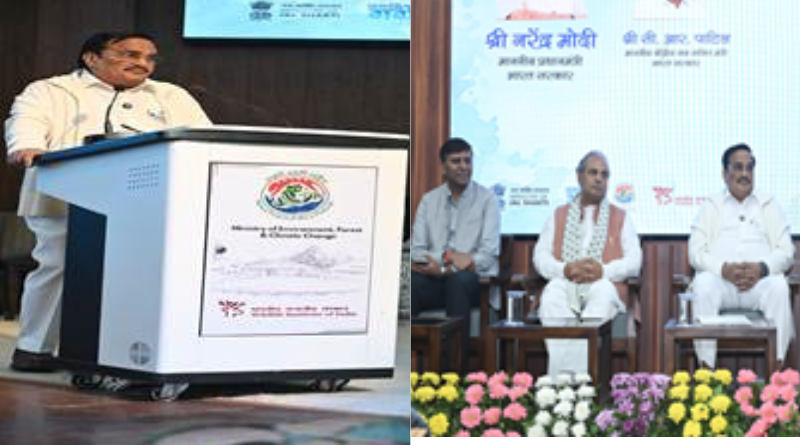
New Delhi, January 14, 2026: Union Minister for Jal Shakti CR Paatil reaffirmed the Government of India’s commitment to protecting rivers not merely as channels of water, but as life-supporting ecosystems, emphasizing lies of the thriving of aquatic biodiversity.
CR Paatil inaugurated several significant and far-reaching initiatives under the Namami Gange Mission at the Wildlife Institute of India (WII), Dehradun, during a special program focused on river rejuvenation and aquatic life conservation.
The event was attended by Dr. Vinay Kumar Ruhella, Vice Chairman, State Disaster Management Authority, Uttarakhand; Dr. Gobind Sagar Bhardwaj, Director, Wildlife Institute of India; Rajeev Kumar Mital, Director General, National Mission for Clean Ganga (NMCG); along with senior officials, researchers, conservation experts and students.
Under the Namami Gange program, the Wildlife Institute of India has partnered with the National Mission for Clean Ganga to establish a dedicated Centre for research, monitoring and policy support for aquatic biodiversity conservation.
CR Paatil advocated for a river monitoring system:
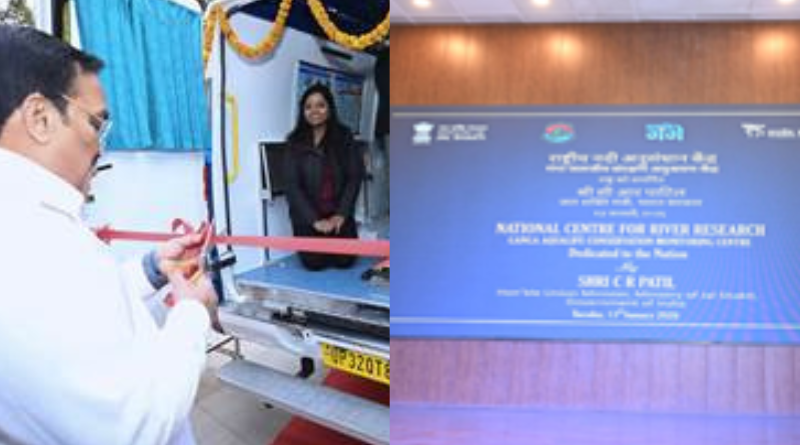
The Minister inaugurated and dedicated to the nation the ‘Aqua Life Conservation Monitoring Centre for Ganga and Other Rivers,’ an advanced institutional framework aimed at the long-term protection and conservation of aquatic species in the Ganga and other river systems.
The Centre will employ modern technology, scientific research and data-driven decision-making to strengthen monitoring and conservation efforts.
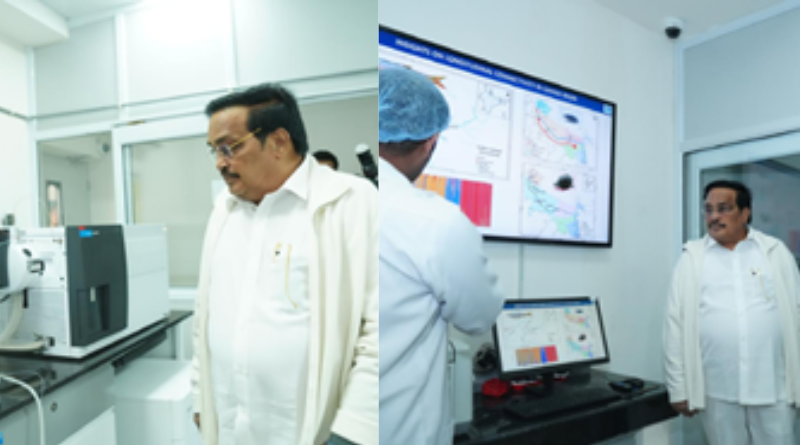
It houses specialized laboratories for ecotoxicology, aquatic ecology and spatial ecology, enabling water and species sampling and identification of ecological hotspots.
A dedicated microplastics laboratory has also been established to assess microplastic contamination in river ecosystems.
The Centre is expected to play a crucial role in policy formulation, research guidance and conservation strategy development in the future.
During the program, CR Paatil also inaugurated the Dolphin Rescue Ambulance of TSAFI, significantly strengthening dolphin conservation efforts.
Ambulance for dolphins:
The ambulance will provide a rapid, scientifically equipped response for Ganga dolphins in distress.
CR Paatil stated that the Ganges dolphin is a sensitive indicator of river health and that this initiative reflects the government’s seriousness towards protecting India’s national aquatic animal.
The initiative is a major effort of NMCG in dolphin rescue and conservation.
CR Paatil also interacted with researchers and MSc students of the Wildlife Institute of India. Under the Namami Gange initiative, WII has launched a two-year Master’s program in Freshwater Ecology and Conservation. Designed to train future conservationists in river restoration, biodiversity protection and sustainable water management through science, fieldwork and policy studies.
The Minister congratulated the students for choosing this specialized field and dedicating themselves to river conservation and rejuvenation.
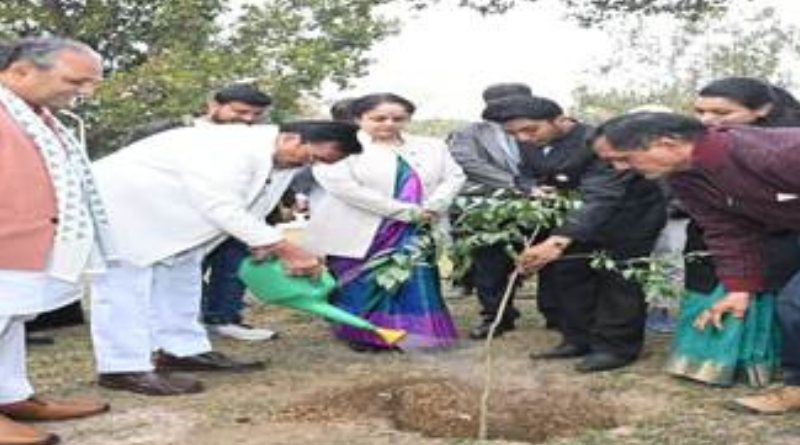
The Union Minister also participated in a plantation drive at WII, dedicating it to the Prime Minister-led ‘Ek Ped Maa Ke Naam’ campaign.
Tree plantation, he noted, is an integral component of the Namami Gange program and plays a vital role in conserving river ecosystems.
The program also witnessed the formal launch of the Indian Skimmer Conservation Project by the Bombay Natural History Society (BNHS).
The initiative aims to protect rare bird species along the riverine stretches of the Ganga and underscores that river conservation extends beyond water and aquatic species to the protection of the entire river ecosystem.
These species serve as indicators of river health and symbols of India’s rich natural heritage.
CR Paatil emphasized that by giving equal importance to uninterrupted flow, cleanliness and biodiversity, Namami Gange has adopted a multi-dimensional scientific and integrated approach.
The Minister also highlighted the success of the first phase of TSAFI’s Turtle Conservation project, noting that turtles act as silent sentinels of river systems and indicate ecological balance.
The project demonstrated that endangered species can be revived through scientific reintroduction, continuous monitoring and community participation.
Under the re-wilding initiative, 15 captive-reared Narrow-headed Softshell Turtles (Chitra Indica) were released into the middle Yamuna, with 10 individuals fitted with radio transmitters for monitoring.
Volunteers play a key role in river conservation:
Interacting with Ganga Praharis, CR Paatil noted that the active participation of community volunteers and youth has played a key role in river conservation.
He highlighted that the increasing population of over 6,000 Ganga dolphins stands as strong evidence of improved river health.
This success, he said, is the result of Jan Bhagidari—the collective efforts of the government and local communities working together for a cleaner and more sustainable Ganga.
EOM.

Pingback: Aqua Life Conservation monitoring Centre established at the Wildlife Institute of India (WII), Dehradun.