Women’s participation in MGNREGS remains above 50%; the new VB-G RAM G Act expands rural job guarantee.
Photo Credit: The Suncity News
New Delhi, February 10, 2026: Women’s participation under the Mahatma Gandhi National Rural Employment Guarantee Scheme (MGNREGS) has consistently remained above 50 percent during the last three financial years, including the current financial year 2025-26, the government informed Parliament on Tuesday.
Highlighting a major expansion of rural employment security, the Viksit Bharat—Guarantee for Rozgar and Ajeevika Mission (Gramin) {VB-G RAM G Act, 2025} enhances the statutory employment guarantee from 100 days to at least 125 days of wage employment per rural household per year.
VB-G RAM G will empower women through employment:
The Act also strengthens provisions for unemployment allowance, making it payable if work is not provided within the stipulated time, with rates linked to the notified wage rate.
The new framework aims to improve household income stability, food security and consumption smoothing for rural families through time-bound wage payments and stronger entitlements.
Under the Act, works will be prioritized across four key themes—water security, core rural infrastructure, livelihood infrastructure, and mitigation of extreme weather events—ensuring the creation of durable and productive rural assets.
Through Viksit Gram Panchayat Plans and convergence with other schemes, the Act links wage employment with long-term livelihood enhancement and infrastructure gap saturation.
Livelihood-related infrastructure such as rural haats, storage facilities, work sheds, and livestock shelters.
Fisheries infrastructure and SHG building will directly support agriculture, improve market access and promote local enterprises.
VB-G RAM G has several women-centric provisions:
The VB-G RAM G Act, 2025, is designed to be gender-inclusive, with several women-centric provisions.
These include a mandatory minimum participation of one-third women, special job cards for women-headed and single-women households, priority to individuals’ assets for women-headed households, a distinct Schedule of rates for women, and provision of crèche facilities at worksites where five or more children under five years accompany working females.
Females will also be encouraged to work as Mates, participate actively in social audits, and hold at least one-third representation in the Central and State Rojgar Guarantee Councils.
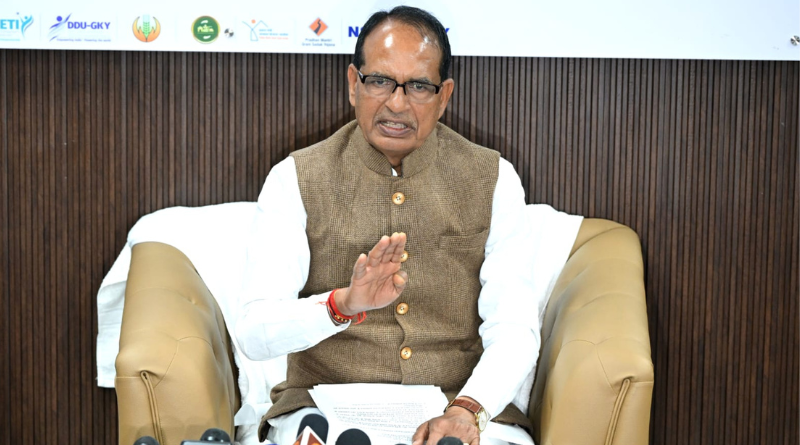
This Information was provided by Minister of State for Rural Development Kamlesh Paswan in a written reply in the Lok Sabha.
EOM.