UPSC introduces major tech and accessibility reforms for CSE and IFoS 2026.
Photo Credit: Social Media.
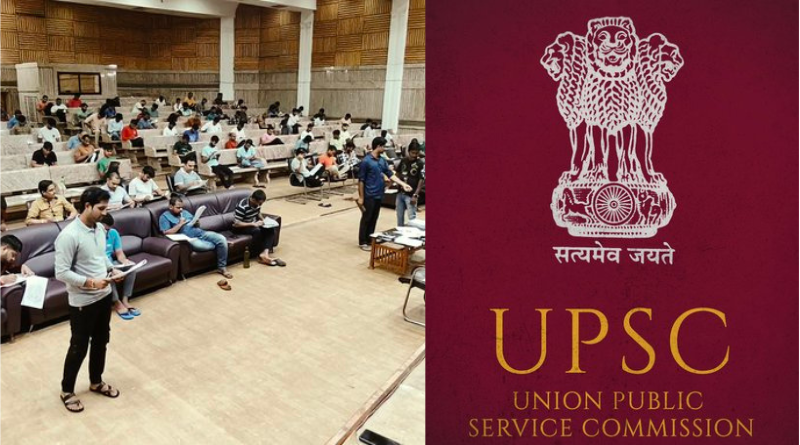
New Delhi, February 5, 2026: The Union Public Service Commission (UPSC) has introduced a series of technology-driven and inclusivity-focused reforms for the Civil Services Examination (CSE) 2026 and the Indian Forest Service Examination (IFoS) 2026, aimed at enhancing candidate convenience, accessibility, and examination security.
According to the notification issued for 2026, a total of 933 vacancies have been announced for the Civil Services Examination, while 80 vacancies have been notified for the Indian Forest Service Examination.
New online application portal launched for the UPSC examination:
As part of its efforts to improve efficiency, transparency, and fairness, the Commission has launched a new online application and examination portal.
The portal is designated to streamline the application process, strengthen safeguards across different stages of the examination, and simplify procedures for persons with disabilities (PwD).
The upgraded platform also introduces technology-enabled security features, including photo verification and facial recognition, to ensure robust identity verification and enhance the integrity of the examination process.
In a significant step towards inclusivity, UPSC has comprehensively revised its examination centre allocation framework for candidates with disabilities.
Under the new system, there will be no capacity limit for examination centres for PwD candidates.
Initially, the existing capacity of each centre will be shared by both PwD and not-PwD candidates.
Once a centre reaches its general capacity, it will close for non-PwD candidates, but PwD candidates will continue to have access to that centre.
If required, additional capacity will be created to ensure that no PwD candidate is denied their preferred examination centre.
Explaining the rationale, UPSC Chairman Dr Ajay Kumar said, “An analysis of examination centre data from the past five years has revealed that some centres, including Delhi, Cuttack, Patna, and Lucknow, fill up very quickly due to the higher number of applications, causing difficulties for PwD candidates. With the revised system, every PwD candidate will be assured of their preferred examination centre.”
To reduce congestion at high-demand locations, UPSC has expanded its examination centre network with new centres like Meerut added in the list to ease pressure on Delhi-NCR, Kanpur to support Lucknow, and Bhubaneswar to address demand near Cuttack.
Total preliminary exam centres increased from 80 to 83.
New centres like Bhubaneswar, Srinagar, and Imphal have been added for the main examination. The total main examination centres increased from 24 to 27.
Smart centre planning through candidate preferences:
The revamp application portal now includes a new examination centre preference feature.
In addition to choosing from the notified centres, candidates will also be asked to select nearby preferred cities from a drop-down list.
This data will act as a preferred survey, helping the UPSC identify future locations for setting up new examination centres, where feasible.
Highlighting the UPSC’s broader vision, Dr Ajay Kumar said, “The UPSC has adopted the use of the latest technology to ensure a free, fair, inclusive, and accessible examination process. Special attention has been paid to enhancing candidate convenience and ease of participation, while ensuring that selection is based solely on merit.”
These reforms form part of the UPSC’s centenary celebrations and underscore the Commission’s ongoing commitment to modernizing its processes while upholding the highest standards of fairness, transparency, and institutional integrity.
Also Read: BPSC declares 70th combined main examination result; 5401 candidates qualified for interview.
EOM.