IIT Roorkee study warns of changing Western Disturbances, heightened climate risks for the Himalayas.
Photo Credit: IIT Roorkee
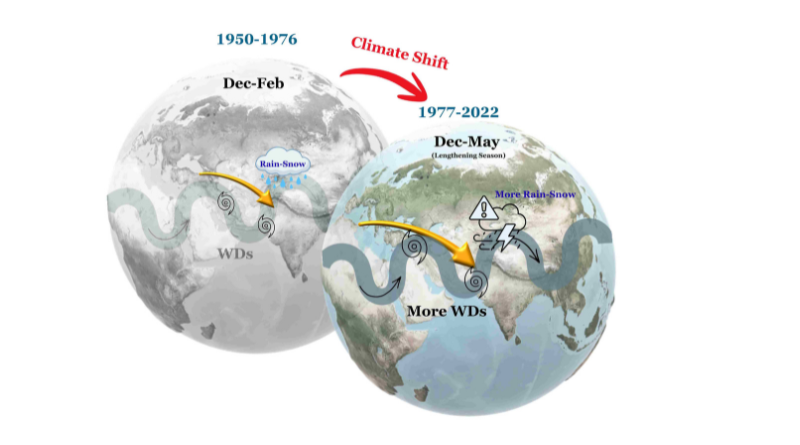
Roorkee (Uttarakhand), February 11, 2026: A new study by the Indian Institute of Technology (IIT Roorkee) has revealed a significant shift in the behavior of Western Disturbances (WDs)—a key weather system that governs rainfall and snowfall across the Himalayan region—raising fresh concerns over climate resilience, disaster preparedness, and water security in northern India.
Traditionally linked to winter snowfall, Western Disturbances are now exerting a growing influence during the pre-monsoon months, disrupting the established seasonal pattern of precipitation in the Himalayas and adjoining regions.
The findings, published in the International Journal of Climatology, indicate that climate warming is not only intensifying extreme weather events but also reshaping the timing, structure, and reach of large-scale atmospheric systems.
The latest study of IIT Roorkee pointed out that Western Disturbances are travelling longer distances:
According to the study, Western Disturbances are travelling longer distances, accumulating greater moisture, and remaining active beyond the cold season.
This has led to a marked increase in WD-associated precipitation during March to May, significantly raising the risk of flash floods, landslides, and extreme rainfall events across the fragile Himalayan terrain, while also affecting long-term water availability in downstream regions.
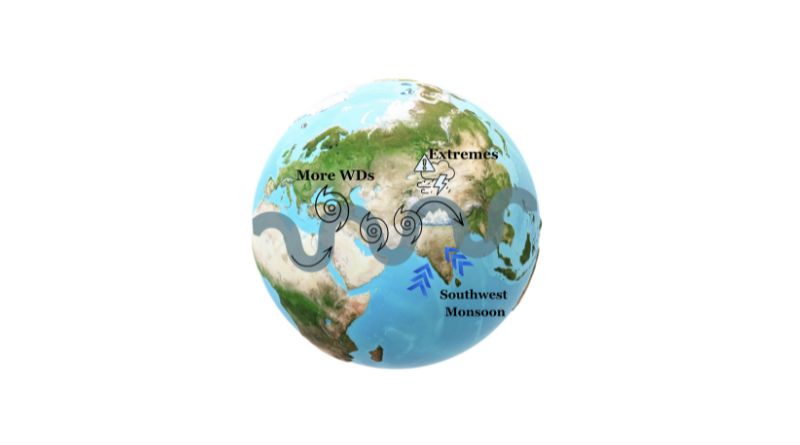
The researchers analysed more than 70 years of atmospheric circulation and rainfall data, identifying substantial changes in WD pathways, including enhanced moisture uptake and stronger upper-level winds—factors that amplify rainfall intensification outside the traditional winter window.
Views of experts:
“These changes explain why we are increasingly witnessing erratic rainfall and sudden extreme events,” said Spandita Mitra, PhD Scholar, Department of Hydrology, IIT Roorkee. “Disasters such as the 2023 Himachal floods and the 2025 Uttarakhand floods reflect the growing influence of Western Disturbances, even overlapping with the monsoon season.”
Lead Principal Investigator Prof. Ankit Agarwal, Department of Hydrology, IIT Roorkee, noted that the disturbances are undergoing “significant seasonal and structural changes, particularly during the pre-monsoon period,” with far-reaching consequences for water resources, disaster vulnerability, and extreme weather management in the Himalayas.
Highlighting the broader implications, IIT Roorkee Director Prof. K. K. Pant said the finding underscores the urgency of rethinking climate resilience strategies in ecologically sensitive regions.
“As climate change accelerates, scientific institutions must play a proactive role in translating research into policy-relevant, actionable solutions for sustainable development and disaster preparedness,” he said.
The study calls for updated climate models, dynamic forecasting systems, and region-specific risk assessments to better anticipate evolving weather patterns and safeguard lives, livelihoods, and critical ecosystems in the Himalayan region.
EOM.