Ashwini Vaishnaw announces RailTech Policy, full digitization of the Railway Claims Tribunal.
Photo Credit: PIB
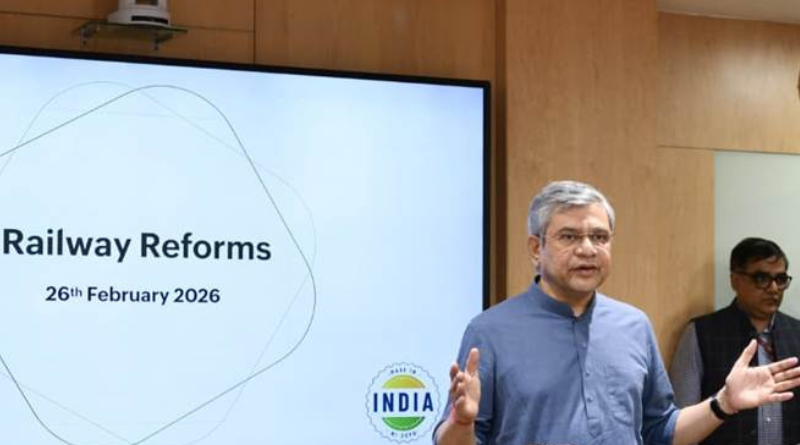
New Delhi, February 26, 2026: In a major push towards technology-driven governance and innovation-led transformation, Ashwini Vaishnaw, Union Minister for Railways, on Thursday announced two landmark reforms under Indian Railways’ flagship initiative “52 Reforms in 52 weeks.”
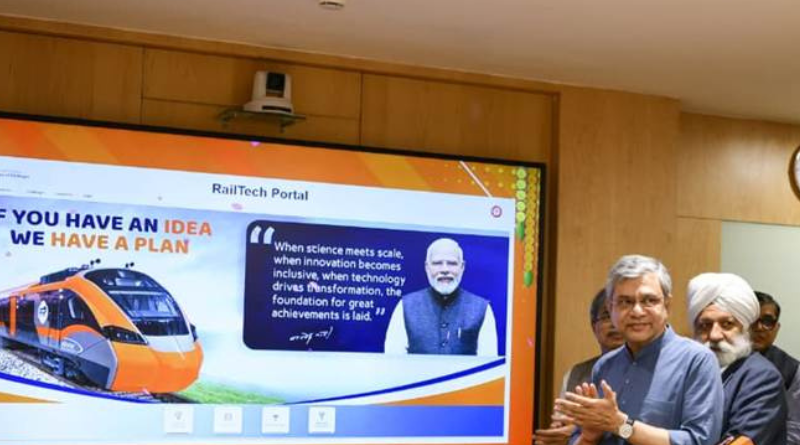
Ashwini Vaishnaw inaugurated the RailTech Policy:
The Minister unveiled the RailTech Policy as Reform Number Three and announced the complete digitization of the Railway Claims Tribunal (RCT) as Reform Number Four, aimed at making the railways more innovative, transparent, efficient and citizen-centric.
The newly introduced Rail Tech Policy is designed to systematically integrate cutting-edge technologies into Indian railways by engaging startups, innovators, academic institutions and industry partners.
The policy simplifies the innovation onboarding process and introduces a dedicated RailTech Portal, enabling a fully digital, end-to-end system for proposal submission, evaluation, trials and adoption.
Innovators can initiate or respond to innovation challenges through a single-stage detailed proposal submission.
The scale-up grant has been increased more than three times. The maximum grant for prototype development and trials has been doubled. Railways will fund up to 50% of development costs for viable solutions, followed by long-term orders if trials succeed.
AI-based Elephant Intrusion Detection System (EIDS), AI-enabled fire detection in coaches, Drone-based broken rail detection, Rail stress monitoring systems, sensor-based load calculation for parcel vans, Solar panels on coaches, AI-based coach cleaning monitoring, Obstruction detection in foggy conditions, AI-enabled pension processing and dispute resolution.
Explaining the reform, Ashwini Vaishnaw said the policy aims to move away from rigid vendor-driven procurement models towards an innovation-first approach focused on trials, validation and large-scale adoption.
Ashwini Vaishnaw added that the policy draws inspiration from successful innovation frameworks such as iDEX in defence, and startup ecosystems in electronics, IT and telecom sectors.
The Minister highlighted that technologies such as AI-enabled CCTV for passenger security, predictive track monitoring using radar, infrared and ultrasonic tools, and AI-based overhead wire fault prediction could significantly reduce accidents and enhance safety. Drone-based monitoring of rail fractures, overheating insulators and infrastructure defects was also identified as a priority area.
E-RCT: reform number four:
As part of Reform Number Four, Vaishnaw announced the complete digitization and AI-enabled transformation of the Railway Claims Tribunal (RCT) through the E-RCT system.
The reform will enable end-to-end computerization of the RCT, transforming the filing, processing and adjudication of claims into a faster, transparent and fully digital process.
Currently, the Railway Claims Tribunal operates through 23 benches in 21 cities, with the Principal Bench in Delhi. Claimants often face difficulties due to physical filing requirements and jurisdiction-related challenges.
Under the E-RCT system, claims can be filed online from anywhere in the country, the entire case lifecycle will be digitized and AI-enabled, ALL 23 RCT benches will be fully digitized within 12 months, and hybrid hearings (physical + virtual) will be enabled in line with Supreme Court guidelines.
Ashwini Vaishnaw said that if the E-RCT model proves successful, similar digital solutions could be extended to other tribunals, including the Central Administrative Tribunal.
Earlier this month, the Minister had announced two other reforms under the “52 Reforms in 52 Weeks” initiative, including continuous end-to-end cleaning of general coaches and the expansion of Gati Shakti Cargo Terminals to over 500 hubs, aimed at boosting logistics efficiency across Indian Railways.
Also Read: Ashwini Vaishnaw claims the Rail Budget for Tamil Nadu up over 8.5 times since 2014.
EOM.