
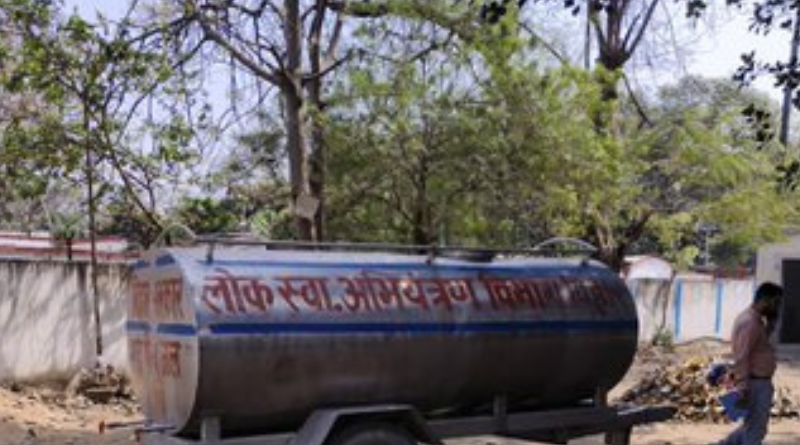
Photo Credit: PHED
Patna, March 17, 2026: Ahead of the summer season, when groundwater levels typically decline, the Public Health Engineering Department of Bihar (PHED) has intensified its efforts to ensure there is no shortage of portable water, particularly in rural areas of Bihar.
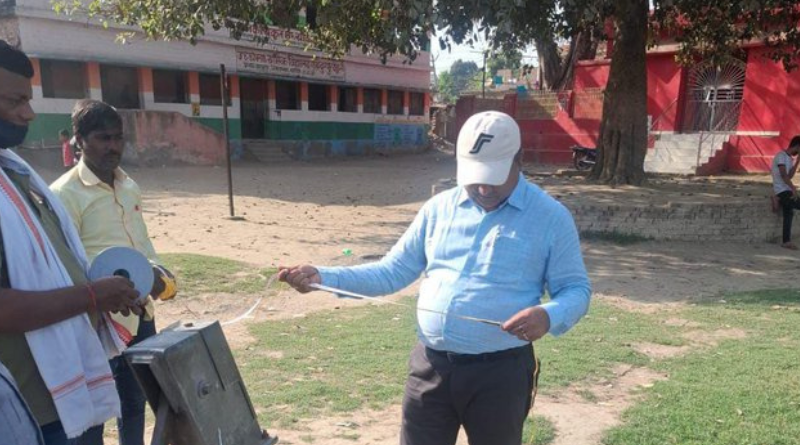
ON Tuesday, PHED officials conducted inspections in the Bahadurpur Block.
At Middle School Dekuli, the team assessed groundwater levels and checked the functionality of hand pumps used for drinking water supply.
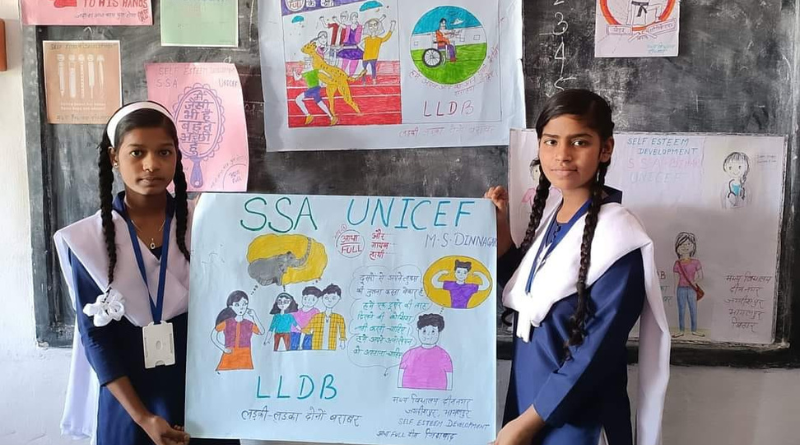
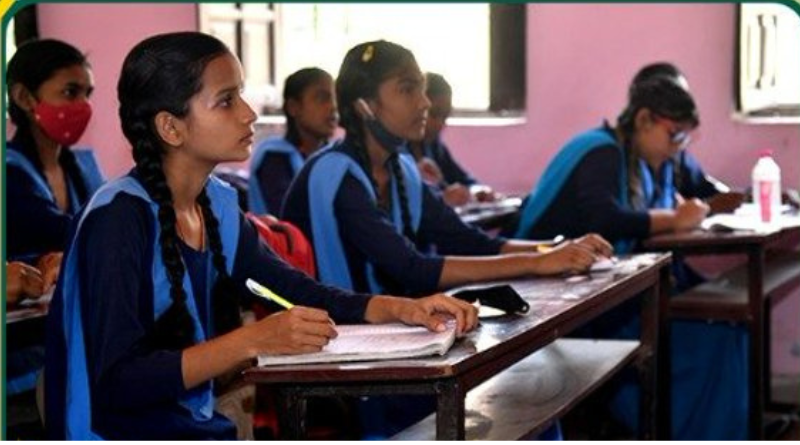
A similar inspection was carried out at Girls’ High School, Darhar in Darhar Panchayat, where water availability and supply arrangements were found to be satisfactory.
PHED officials reviewed potable water in Khagaria:
The PHED headquarters team, along with senior officials, also reviewed water supply schemes under the Public Health Division in Khagaria district.
The Superintending Engineer inspected facilities in Ward No. 4 of Gaurashakti village, examining groundwater levels, hand pump functionality, and overall drinking water arrangements in the presence of field engineers.
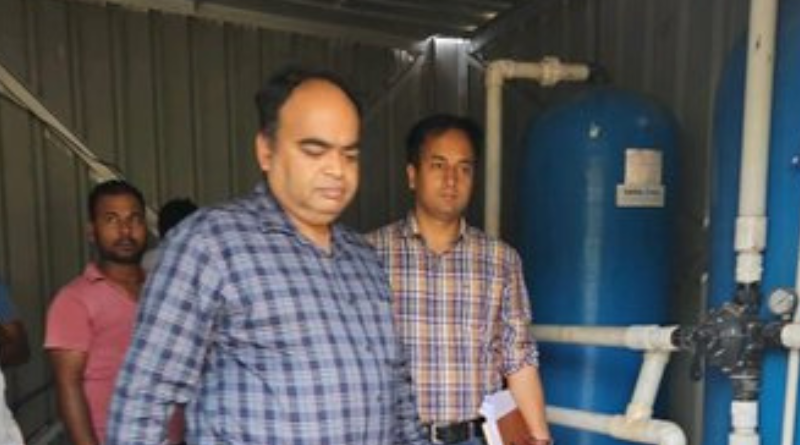
Officials stressed that regular testing of drinking water quality is essential to safeguard public health.
Water samples are being tested using Field Test Kits (FTKs) to ensure safety standards are maintained.
“Clean drinking water is crucial for the health of the general public, and its quality must be monitored at regular intervals,” an official said.
Public appeal for participation:
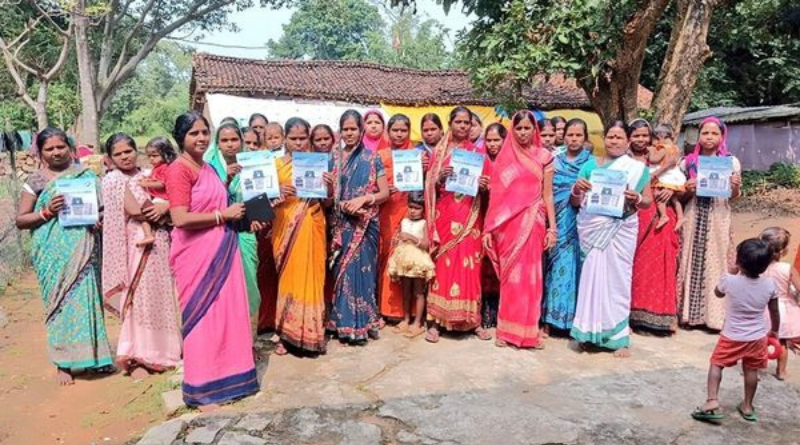
The PHED officials urged residents to support rural water supply systems by paying a monthly user charge of Rs 30, stating that public participation is key to sustaining and improving water infrastructure.
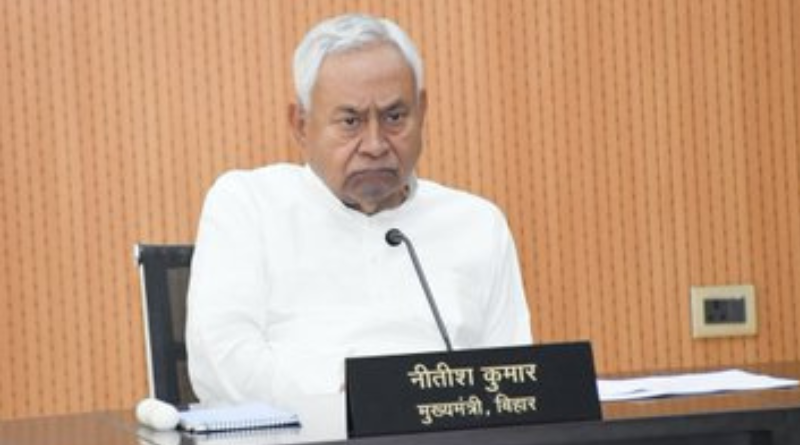
The Initiative is being carried out under the Har Ghar Nal Ka Jal Yojana, a flagship program of Chief Minister Nitish Kumar under the Saat Nischay (Seven resolves) vision.
It also aligns with broader environmental and sustainability efforts such as the Jal-Jeevan-Hariyali mission.
Officials said the focus remains on ensuring a safe, accessible, and reliable drinking water supply across the state as summer approaches.
According to data available up to March 2025, Bihar has made significant progress in ensuring access to potable drinking water in rural areas under the combined efforts of the state’s “Har Ghar Nal Ka Jal” scheme and the Jal Jeevan Mission.
95% potable water in Bihar:
As per official data monitored through the Jal Jeevan Mission—IMIS and reviewed in coordination with institutions such as NITI Aayog, over 95% of rural households in Bihar have been provided with potable tap water connections.
Specifically, coverage has reached approximately 95.71 % of rural households as of March 2025.
The state’s performance has been consistently strong over the years. As of late 2021, more than 1.06 lakh rural habitations—out of around 1.08 lakh total—had access to potable water supply of at least 40 litres per capita per day (Ipcd), meeting prescribed service benchmarks.
Further, a 2020-21 survey indicated that about 96.2% of households in Bihar had functional tap connections, with water being supplied at least once during the week preceding the survey—slightly higher than the national average at the time.
Owing to this sustained progress, Bihar has been categorized as a “High Achiever” in the implementation of household tap water connectivity.
A key driver behind this achievement has been the state government’s ambitious “Har Ghar Nal Ka Jal” scheme, launched in 2016 under the leadership of Chief Minister Nitish Kumar.

The initiative significantly accelerated rural water infrastructure development and complemented the objectives of the Jal Jeevan Mission.
Overall, Bihar’s strides in expanding tap water access highlight a strong example of coordinated state and central efforts in improving rural infrastructure and public health outcomes.
Also Read: CM Nitish Kumar will campaign in the Bihar Assembly election on a high-tech ‘Nischay Rath.’
EOM.