

Photo Credit: Social Media
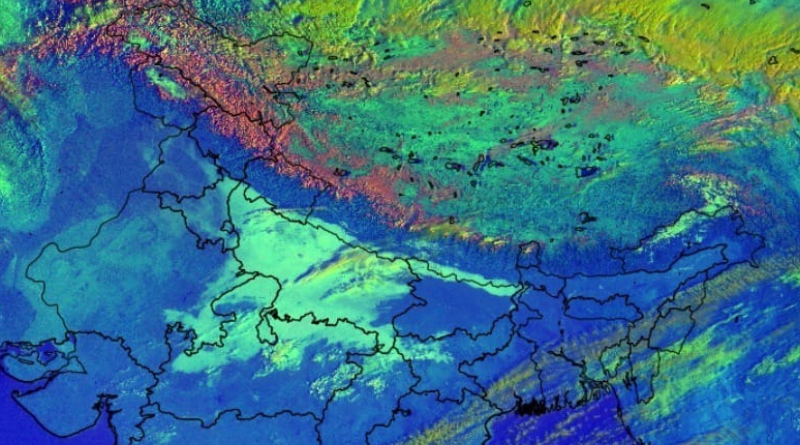
New Delhi, February 5, 2026: In response to the increasing frequency and intensity of extreme weather events driven by climate change, the Government of India has undertaken a series of major initiatives to strengthen weather monitoring, forecasting, and climate research capabilities across the country.
The India Meteorological Department, under the Ministry of Earth Sciences (MoES), is working round the clock in coordination with State Governments,
The Ministry of Home Affairs (MHA) and the National Disaster Management Authority (NDMA) to monitor, detect, and issue timely warnings for severe weather events such as heavy rainfall, heat waves, cyclones, thunderstorms, and fog.
Expanded observation network on weather:
To improve detection at finer spatial-temporal scales, India has significantly expanded its observational infrastructure. This includes a major increase in Automatic Weather Stations (AWS), Automatic Rain Gauges (ARG), and Doppler Weather Radars (DWRs). At present, 47 DWRs are operational across the country, providing radar coverage to 87 percent of India’s geographical area, enabling more accurate and localized weather monitoring.
Mission Mausam: towards a weather-ready India.
The Ministry of Earth Science has launched Mission Mausam. Aimed at transforming India into a “Weather-ready and Climate-smart” nation. The mission focuses on reducing the impacts of climate change and extreme weather through advanced forecasting systems and early warning mechanisms.
Under mission Mausam, the Bharat Forecast System (BharatFS)—an advanced numerical thunderstorm prediction model—has already become operational. Running at a high spatial resolution of 6 km, Bharat FS is capable of predicting rainfall and other weather events up to 10 days in advance, covering both short-and medium-range forecasts. Its enhanced resolution allows thunderstorm predictions at the panchayat or cluster-of-panchayats level, a major leap in localized forecasting.
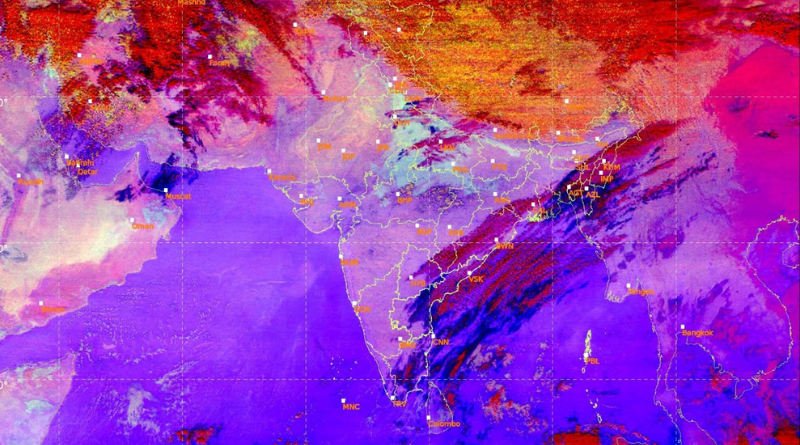
To support real-time high-resolution simulations, India’s high-performance computing infrastructure has been substantially upgraded. The supercomputers Arunika and Arka now enable the integration of massive observational datasets and the execution of meso-scale, regional, and global weather models.
Mithuna forecast system: a new-generation model:
A major technomogical breakthrough under Mission Mausam is the introduction of the Mithuna Forecast System (Mithuna-FS). This next-generation global coupled forecasting model integrates the atmosphere, ocean, land surface, and sea ice using state-of-the-art physics and an advanced data assimilation framework.
Currently operating at a 12-km resolution, Mithuna-FS represents a significant improvement in India’s medium-range localized weather forecasting. The Mithuna-FS suite also includes: A 4-km high-resolution regional model for improved simulation of monsoon systems, cyclones, and mesoscale extreme events over the Indian subcontinent.
A 330-m hyper-resolution urban model designed for accurate forecasting of fog, visibility, and air quality over the Delhi region.
Climate change research and modeling:
The IITM Earth System Model (IITM-ESM), developed in-house at the Indian Institute of Tropical Meteorology (IITM), Pune, plays a critical role in studying long-term climate variability and change, with a special focus on the South Asian monsoon. IITM-ESM has contributed to the Coupled Model Intercomparison Project (CMIP) and global climate change assessments, including the Intergovernmental Panel on Climate Change (IPCC) Sixth Assessment Report—the first such contribution from India.
The model has also supported the Ministry of Earth Sciences’ National Assessment Report on Climate Change over the India Region, which provides comprehensive insights into regional climate trends and extremes.
Global collaboration and data sharing:
India actively collaborates with international initiatives such as CMIP, the World Climate Research Program (WCRP), and the World Weather Research Program to enhance global understanding of weather and climate systems.
The Centre for Climate Change Research (CCCR) at IITM, established by MoES, has developed advanced infrastructure, including an Earth System Grid Federation (ESGF) data node. This platform facilitates the dissemination of global and regional climate model data to stakeholders working on vulnerability, impact, and adaptation (VIA) studies
Global climate projections generated using IITM-ESM under CMIP and IPCC, as well as regional climate projections for South Asia under the CORDEX program, are made available through the ESGF node at IITM, supporting informed climate action and policy planning.
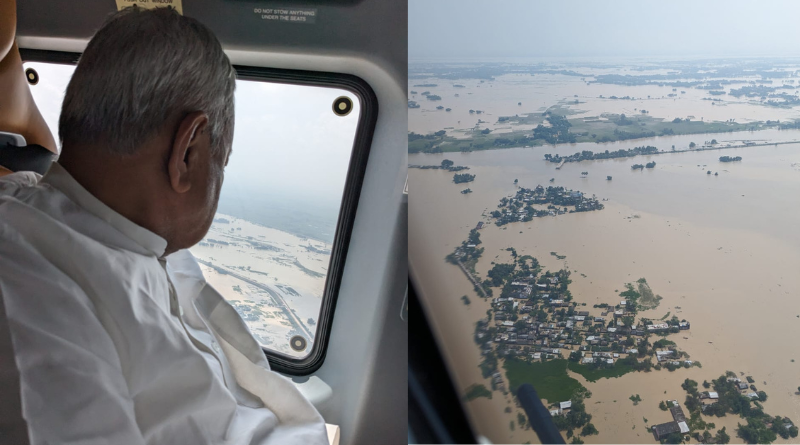
Also Read: Bihar CM Nitish Kumar’s Katihar has been postponed for the 2nd time due to bad weather.
EOM.



































































































One Response