

Photo Credit: PIB
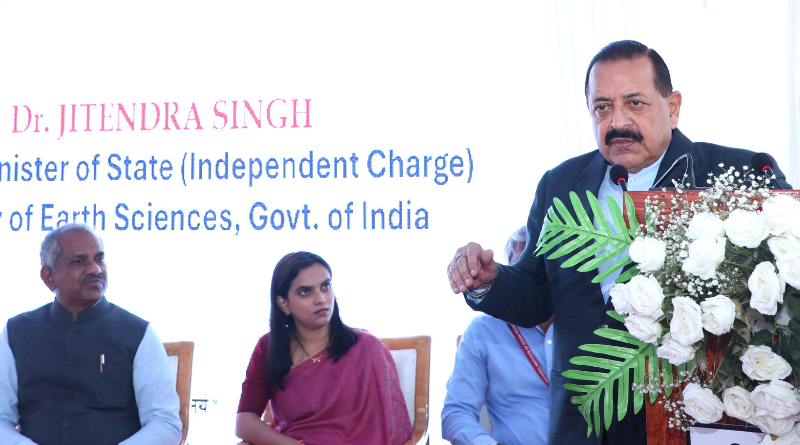
New Delhi, January 17, 2026: Dr Jitendra Singh, the Union Minister of State for Science & Technology and Earth Science, and Minister of State in the PMO, Personnel, Public Grievances, Pensions, Atomic Energy and Space, on Saturday said that India’s future economic value addition will increasingly come from untapped marine resources, as the country advances rapidly towards becoming one of the world’s leading economies.
Dr. Jitendra Singh was speaking during his visit to the Atal Centre for Ocean Science and Technology for Islands (ACOSTI), where he launched and reviewed key marine technology initiatives aimed at strengthening the Blue Economy and improving livelihoods in the Andaman & Nicobar Islands.
Dr. Jitendra Singh mentioned the centre’s views on the blue economy:
Addressing scientists, officials and stakeholders, Dr. Jitendra Singh said the Government’s strong focus on the Blue Economy reflects Prime Minister Narendra Modi’s vision that India’s development cannot be confined to the mainland alone, while inland territories and coastal regions remain underserved.
He emphasized that the inclusive development of islands is essential to achieving the goal of a developed India.
The program was held at ACOSTI, a unit of the National Institute of Ocean Technology (NIOT) under the Ministry of Earth Sciences, at Dollygunj, Vijaya Puram (Port Blair).
The event was attended by Bishnu Pada Ray, Member of Parliament from Andaman & Nicobar Islands, Dr M Ravichandran, Secretary, Ministry of Earth Sciences, senior officials of the Andaman & Nicobar Administration, scientists from NIOT and other research institutions, and representatives of local departments and Self-Help Groups.
Praising the consistent and energetic representation of the Andaman &Nicobar Islands in Parliament, the Minister said sustained advocacy has ensured national attention and resources for island development.
He noted that since 2014, the Prime Minister has accorded the highest priority to the North eastern region and island territories, a shift reflected in the growing scale of scientific, administrative and ministerial engagement in the region.
Referring to the Deep Ocean Mission, Dr Jitendra Singh said it was a matter of pride that the Prime Minister announced the mission twice from the ramparts of the Red Fort, underlining India’s long-term commitment to the Blue Economy.
He observed that as conventional resources are gradually exhausted, marine resources—long under-explored—will play a decisive role in sustaining India’s growth.
The Blue economy, he added, will significantly contribute to employment generation, exports, environmental sustainability and overall economic resilience.
The Minister highlighted key initiatives launched and demonstrated during the program, including pilot-scale open sea cage culture of marine fish and large-scale seaweed cultivation.
He expressed satisfaction that technology transfer has already taken place, reflecting a “whole-of-government, whole-of-society” approach towards building a developed India.
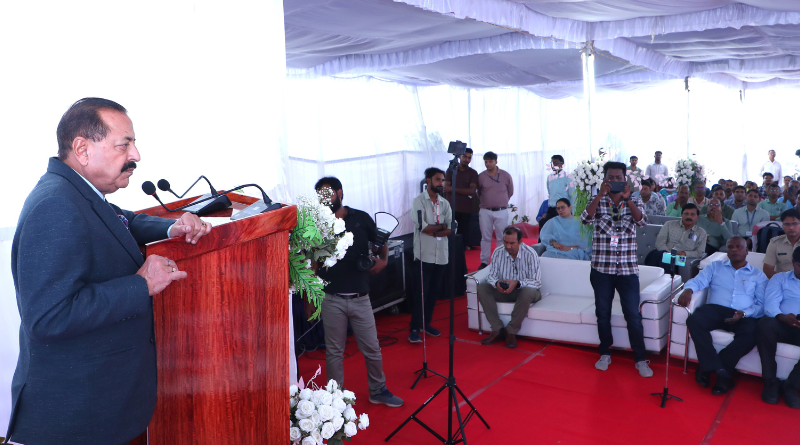
Emphasizing regional suitability, he said the unique marine species and coastal characteristics of the Andaman & Nicobar Islands make the region ideally suited for such projects.
Dr Jitendra Singh also underscored the integration of biotechnology with ocean sciences, noting that India is among the few countries with a dedicated biotechnology policy—BioE3 (Biotechnology for Economy, Environment and Employment).
He said marine bio-resources hold immense potential for developing biodegradable alternatives to plastics, new medicinal compounds and high-value bio-products, which can simultaneously generate employment, protect the environment, protect the environment and strengthen the bio-economy.
Highlighting emerging opportunities, the Minister referred to non-animal food products, alternatives to marine-based nutrition, waste-to-wealth technologies and export-oriented marine produce, pointing to growing international demand, particularly in Europe.
Dr. Jitendra Singh advocated for Vocal for Local:
He stressed the need to enhance Self-Help Groups participation and women’s involvement so that these initiatives supplement household incomes and strengthen the vision of “Vocal for Local” and Local for Global.”
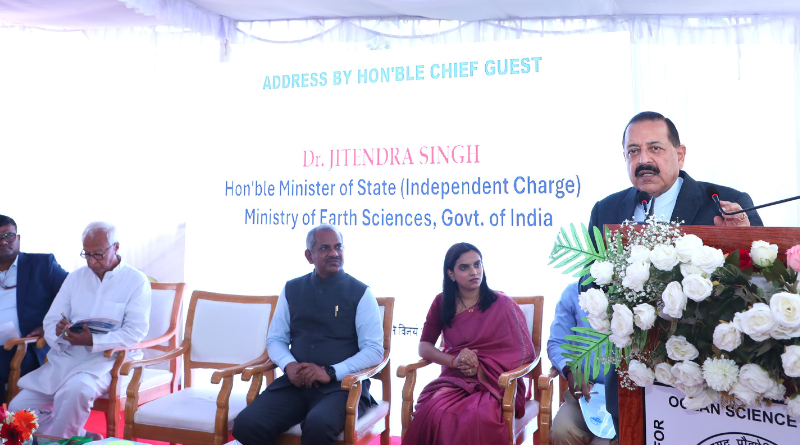
Concluding his address, Dr Jitendra Singh appreciated the enthusiasm and dedication of scientists and local stakeholders and said that with greater institutional collaboration—including potential involvement of CSIR and biotechnology research centers—the Andaman & Nicobar Islands can emerge as a major hub of India’s Blue Economy initiatives.
He reaffirmed the Government’s commitment to sustained engagement with the region and expressed confidence that these efforts would deliver long-term scientific, environmental and socio-economic benefits for the islands.
EOM.

















































































One Response